
Landscapes of The Parklands: A living tapestry woven by nature, our team, and you
A landscape can mean several things. In nature, it typically refers to an expanse of land with boundaries defined largely by what the eye can see, such as a meadow, grassy hillside, or wooded area.
When you think of The Parklands, maybe there’s a landscape that comes to mind right away. Or perhaps you picture several areas. By design, The Parklands is a diverse, connected patchwork of landscapes spanning more than 4,000 acres along the outskirts of Louisville, Kentucky.
Though there are many pieces to the tapestry, with various pathways threading through them, there are four main parts—each with its own unique history and appeal.

Natural areas
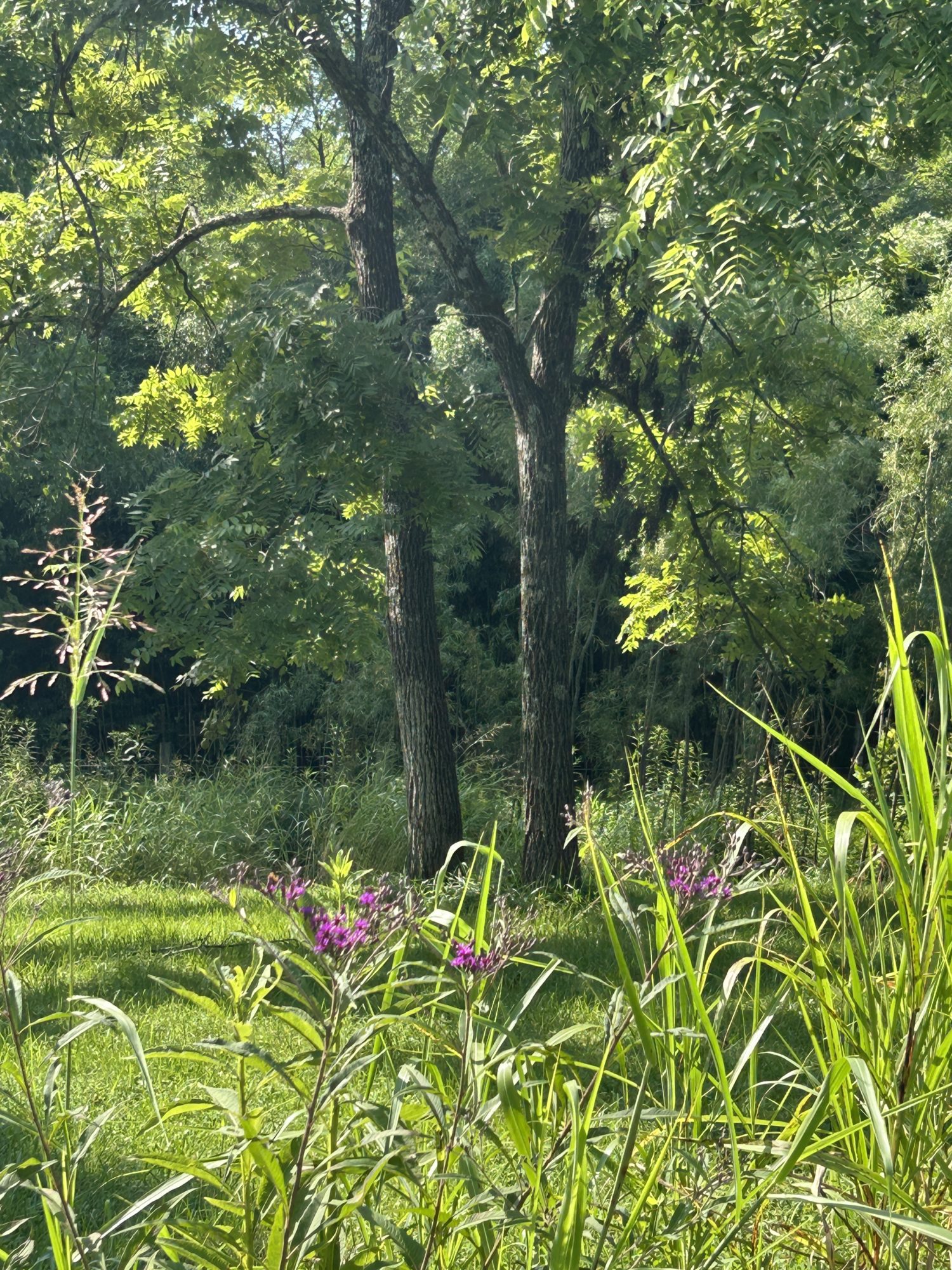
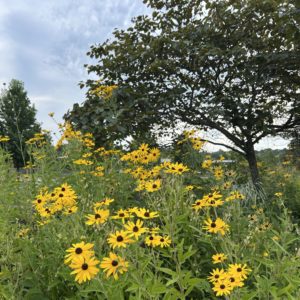
The natural areas within The Parklands are the largest, most complex, and most fundamental of our landscapes. Within this one type of landscape, we have a mix of ecologies, including oak savanna, upland forest, marsh, grasslands, and, of course, riparian areas alongside our streams—just to name a few.
Our goal is to manage toward the full spectrum of successional landscapes (early, mid, and late) to create and preserve the widest possible range of biodiversity. It’s also an extension of our vision to give visitors the opportunity to experience the native landscape of Kentucky close to their homes in Louisville.
Examples:
Turkey Run Forest. The largest forest system in The Parklands, this picturesque area offers a true backwoods feel. Explore the area while hiking the natural-surface Paw Paw Trail, which is connected to the Chinkapin and Hickory Trails. The Brown-Forman Silo Center toward the southern end of Turkey Run Park offers one option for parking.
Prairie Preserve. Natural prairies and grasslands are becoming increasingly rare in Kentucky. Though there are a range of reasons for this, many have become forests through woody succession. The Prairie Preserve in southern Pope Lick Park gives you a beautiful passageway to enjoy a satisfying countryside ambiance with abundant life, from summer pollinators to forbs and shrubs. After crossing the bridge on the Louisville Loop, take a left at the fork, following the gravel path to view the sprawling prairie.

 Gardenesque areas
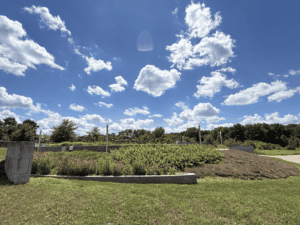
Strolling through a garden with bright blooms and lush greenery is one of the simple delights of spending time outdoors. At The Parklands, the gardens vary in their degree of formality, and each is cultivated for non-agricultural purposes.
Examples:
Humana Grand Allee. A signature pathway of Beckley Creek Park, the Humana Grand Allee is a favorite location for many of our visitors. Along the Festival Promenade, trees have been planted to grow into an archway as they leaf out. In the circular Legacy Commons area at the path’s northernmost end, garden beds emanate from the donor fountain like ripples. The Boardwalk is another lovely spot, particularly on foggy mornings. Take a step off the Country Lane Walk to access our Poetry Trail.
Moss Gibbs Woodland Garden. Situated on 15-acre hillside in Broad Run Park, just north of the Cliffside Center, the Moss Gibbs Woodland Garden connects you to nature in ways that can feel magical. This living woodland is full of marvels, from wildflowers to the Venerable Oak. Stroll along the main stone trail and discover “rooms” like the Garden Parlor and Merlot Rondel. Every bend in the pathway reveals a different room illuminated with breathtaking angles of sunlight. Find a bench, seat, or even a swing to enjoy the quiet stillness.
 Agricultural areas
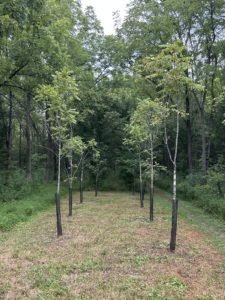
Some parts of the park are still farmed by local farmers who have a relationship with The Parklands. Other areas preserve elements of the park’s agricultural history. The Walnut Grove in The Strand, where eastern black walnut trees now grow in neat rows, is a primary example of the latter.
Example:
Walnut Grove. Nature doesn’t always follow a straight line—unless the trees were deliberately planted. That’s exactly what you’ll see at the Walnut Grove in The Strand, a one-time orchard brought back to life through a restoration project launched in 2020. Today, ongoing care and new plantings are strengthening this vital space, so it can thrive for future generations. It is located along the Louisville Loop, south of The Strand Trailhead.
 Built landscapes
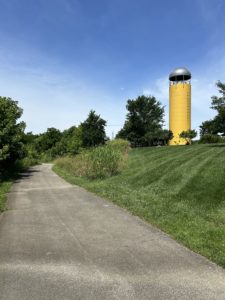
Layered within the natural ecologies of The Parklands are built landscapes. These are human-created areas designed to complement the natural and cultural landscape while supporting human activities and events like weddings, birthday parties, and picnics. Built landscapes include roads, paved paths, and trails.
Examples:
Rounsavall Family Foundation Creekside Center. A hub of activity within Beckley Creek Park, the Robert W. Rounsavall Jr. Family Foundation Creekside Center is a campus containing the Gheens Foundation Lodge, PNC Achievement Center, Marshall Playground and Sprayground, and PricewaterhouseCoopers LLP Pavilion, among other amenities. It is a special place built to welcome everyone to the wonders of nature and our park system.
Brown-Forman Silo Center. A former dairy farm, the Brown-Forman Silo Center is a place that stands as a beautiful and beaconing example of how our landscapes connect visitors to Kentucky’s past and future. Whether you’re climbing the 109 spiraling steps to the Silo Lookout observation deck, hosting an event at the Hockensmith Barn, or playing catch on the lawn, there’s so much to love about this area in southern Turkey Run Park.
 Vast opportunities for adventure
While each of the landscapes of The Parklands has its own design intent and influence on the visitor experience, it is the interaction of these landscapes that provides the greatest sense of adventure. You can attend a wedding, go on a paddling trip, hike through the woods, roller skate on the Louisville Loop—all in the same day if you want.
Stretching for more than 20 miles from north to south, the landscapes of The Parklands have been assembled with great care from farmland, forested hillsides, wet bottomlands, and more. This vast patchwork tapestry is both constantly changing and timeless, shaped by natural forces like the Floyds Fork stream, the work of our site teams, and yes, you—the visitor.
As a park supporter, you make possible the important work of sustaining these landscapes and helping this tapestry endure for generations to come. If you’re interested in supporting our modern vision of fusing function and beauty, click here to learn more about becoming a Member.