
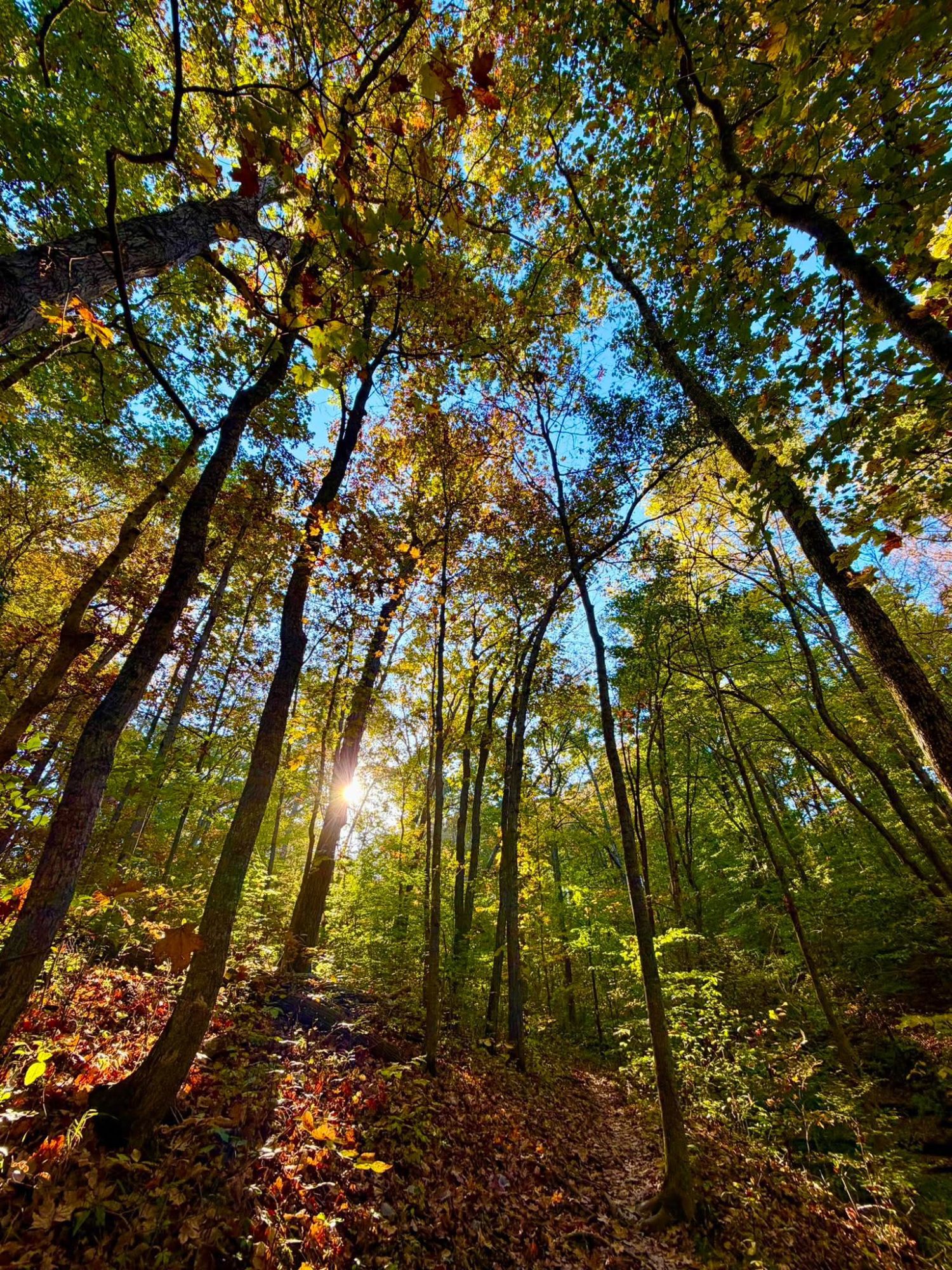
Fall at The Parklands: beautiful views and details worth noticing
With our clocks soon turning back, you may be noticing more changes in the tree foliage. Gradually but ever so surely, the fall color show is building toward its highly anticipated peak display.
Trees like hickories, black walnuts, and tulip poplars, the official Kentucky state tree, are bringing shades of golden yellow to the landscape. Sugar maples are contributing warm oranges, while some eastern white oaks and red maples are adding pockets of scarlet and burgundy.
Beyond the sweeping views, the beauty of the season can also be found in the smaller details. Here are a few worth noticing:
Multiple colors in a single leaf
During the fall, a single leaf can display several colors at once, including green, yellow, orange, and shades of red. As the leaf ages, changes in its pigments can create striking combinations.
The kaleidoscope effect is influenced by the breakdown of chlorophyll, the presence of other pigments, sunlight, and environmental conditions. You can find color blends in sugar maples, red maples, and other deciduous trees.
To see examples of different color patterns within a single leaf, see this article from Harvard Forest. To learn more about the chemical processes behind fall foliage, read our 2025 article on the science of fall color.
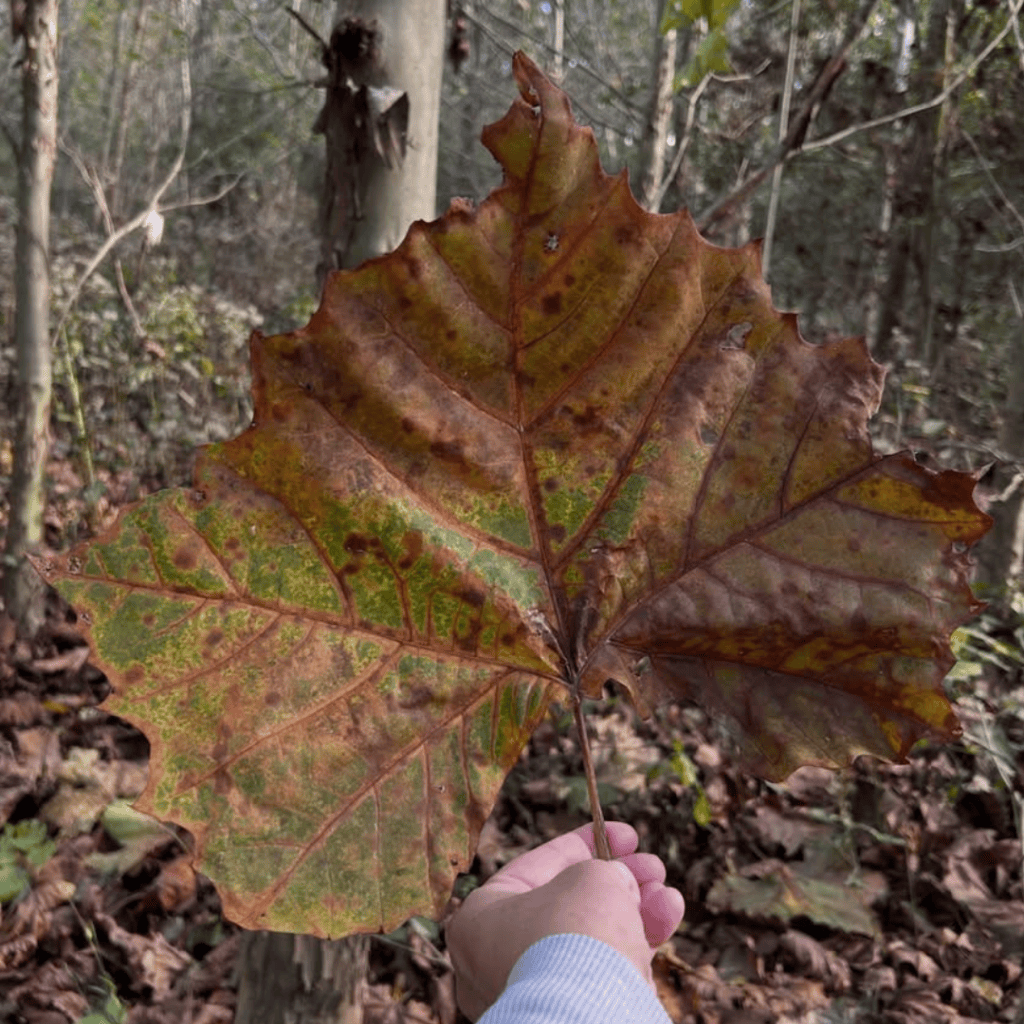 Each leaf’s structure adds distinction
The veins of a leaf create a trail you can follow with your finger. Most broadleaf leaves have a midrib, a main vein running through the center.
In palmate leaves, such as those of the sycamore, several main veins radiate outward from a common point near the base, creating a distinctive pattern. Smaller veins branch off these main veins, forming a network of lines across the leaf.
Like the rest of the leaf, the veins of a sycamore can change color in the fall. Turn a leaf over, and you may notice a fuzzy texture along its underside.
As fall progresses, leaves on sycamores and other deciduous trees can develop interesting holes, tears, and other signs of wear. Insects and caterpillars may leave holes behind, while wind and weather can cause tears and other damage. These natural variations give each leaf its own character, offering another reason to look a little closer.
Fascinating tree shapes and bark texture
As leaves fall, the shapes of a tree’s branches become more apparent. Some twist and curve, while others reach straight toward the sky.
Depending on the species and growing conditions, some riparian trees lean like clock hands toward the creek. One possible contributing factor is phototropism, the tendency of growing plant parts to bend toward available light. Erosion along stream banks can also undermine tree roots, causing trees to lean toward the water.
If you take a closer look at a tree, the patterns, grooves, and textures of its bark can offer clues to its identity. And if you spot a gnarled tree while walking a forest trail, it can be fun to imagine a face in its bark.
To learn about trees commonly found at The Parklands and their distinctive characteristics, including bark appearance, read this recent blog article.
Green moss growing on trees
After looking up at a tree to enjoy its vibrant colors, look down and around its base to see if you can spot green moss.
Although moss often grows on tree trunks, it doesn’t take nutrients from the tree itself. Instead, the tree provides a surface for the moss to grow on. Moss absorbs water and nutrients from its surroundings, making it well suited to damp, shaded environments. You may also find moss growing on logs, rocks, and along the edges of trails.
Its soft, green growth adds another layer of texture to the forest, offering a small but beautiful feature to notice as you explore.
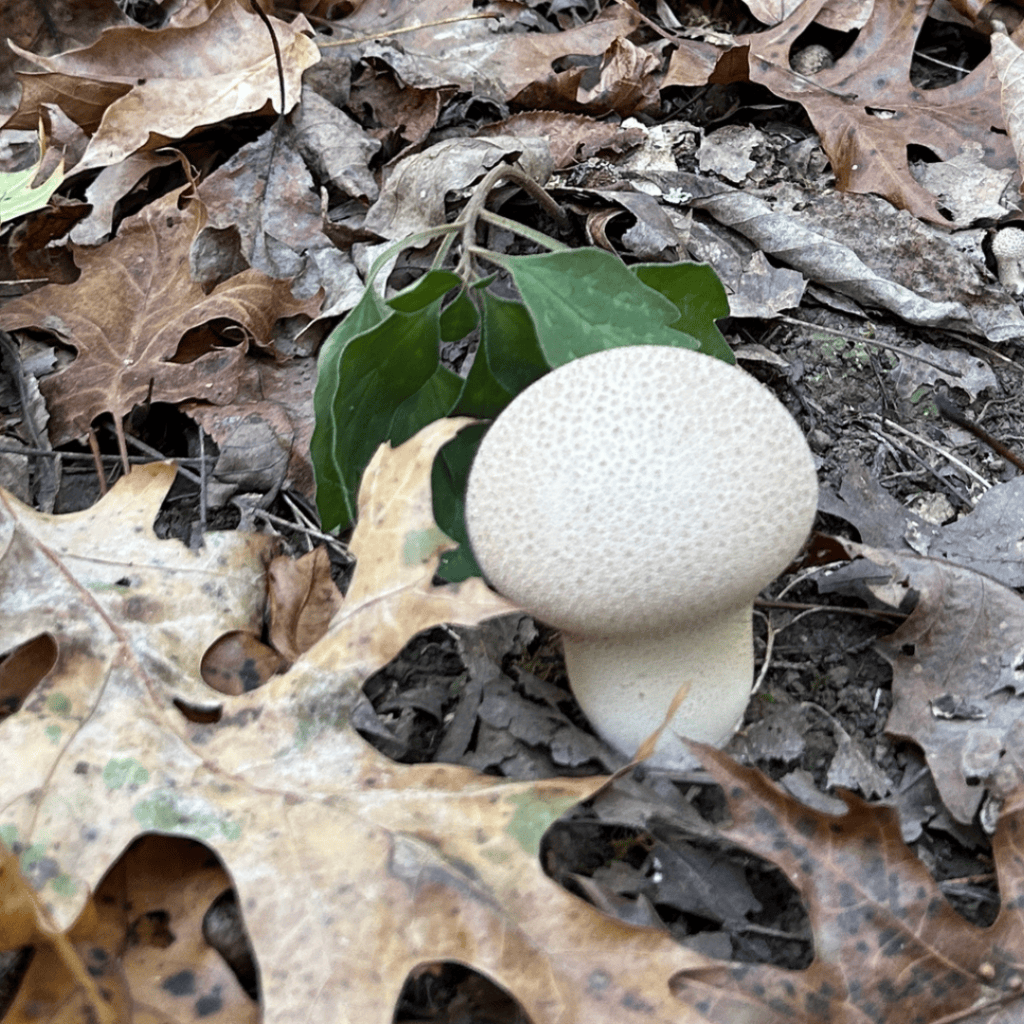 Mushrooms emerging across the forest floor
In fall, changes aren’t limited to the tree canopy or the tree itself. There’s plenty to discover on the forest floor, too.
While mushrooms may not receive the same attention as brightly colored maples, tulip poplars, and hickories, they play important roles in forest ecosystems. Many fungi break down dead organic matter, returning nutrients to the soil, while others form beneficial relationships with living trees.
A few types commonly found in our region in late fall include puffballs, oyster mushrooms, and Hen of the Woods.
Smaller puffballs can grow among leaf litter and other organic debris on the forest floor. Oyster mushrooms typically grow on dead or dying hardwood logs and branches, while Hen of the Woods is often found at the base of oak trees.
Visually speaking, mushrooms are as varied and beautiful as anything else found in the forest. Keep in mind, however, that it’s best to admire wild mushrooms without touching or picking them unless you’re an expert. As a natural defense, some varieties contain potent toxins that can make them poisonous.
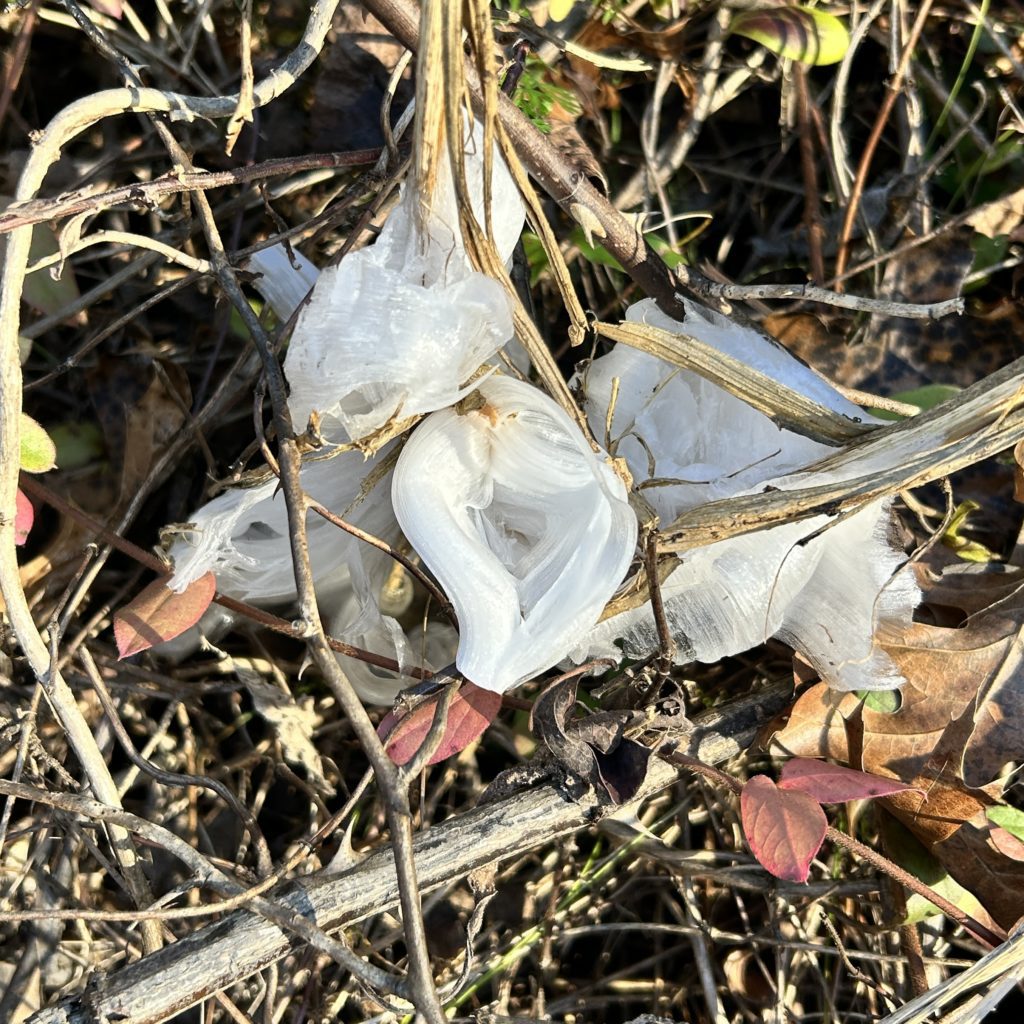 Sculpture-like frost formations
On cooler autumn mornings, you may find that the meadow landscapes sparkle. Grasses and thistles tipped with frost crystals are especially captivating in the fall. In the early morning hours with the right conditions, you may even spot frost flowers.
These delicate, icy formations appear on the stems of certain plants such as white crownbeard/frostweed. Water remaining in the plant is pushed up through the stem, meeting the freezing air and crystallizing into thin, petal-like ice structures. They can be seen along fields, meadows, forest edges, or near wetlands.
Where to enjoy fall’s beauty at The Parklands
During late October and early November, fall’s beauty at The Parklands can be enjoyed in many ways, whether you’re looking high into the trees, noticing the colors of individual leaves, exploring the forest floor, or taking in the views across meadows.
Throughout the parks, fall offers some of the most memorable views of the year. To make the most of the season, take a moment to pause and appreciate the variety of colors, textures, and patterns, down to the smallest details.
For recommendations on where to see fall color, explore our blog: Fall Foliage Peak at The Parklands
If you’re looking for a cozy sweatshirt perfect for fall outings, be sure to shop our 2026 Merch Sale in support of The Parklands. T-shirts and hats also available. Learn more about this limited-time sale and order here!
Special thanks to Debbie Barmore for sharing the article’s main feature photo.