
Early Signs of Spring at The Parklands: Ephemerals, Peepers, Migrating Birds, and More
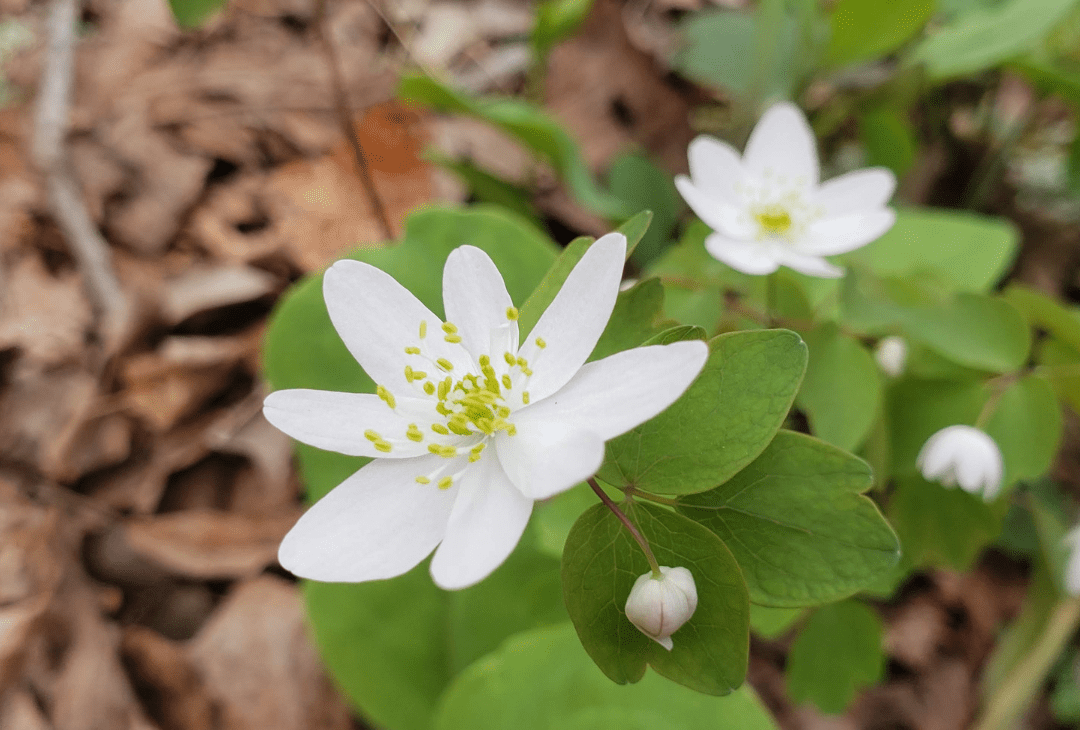
Signs of spring are beginning to pop up across The Parklands! Some are fleeting and delicate, such as the white-to-pink flowers of rue anemone (Thalictrum thalictroides). Others, like leafy tree buds, are abundant across our landscapes. Look toward the sky and you may see migrating birds or hear their calls, as if announcing that the new season is on its way.
Over the next few weeks, see how many signs you can spot in the parks. Take note of the changes unfolding all around you. Before long, you’ll have the delightful realization that spring has fully (and finally) arrived.
Tiny, fleeting blooms
If you’re a native plant lover, you know that many early spring wildflowers are ephemerals, meaning their presence in woodland areas is brief.
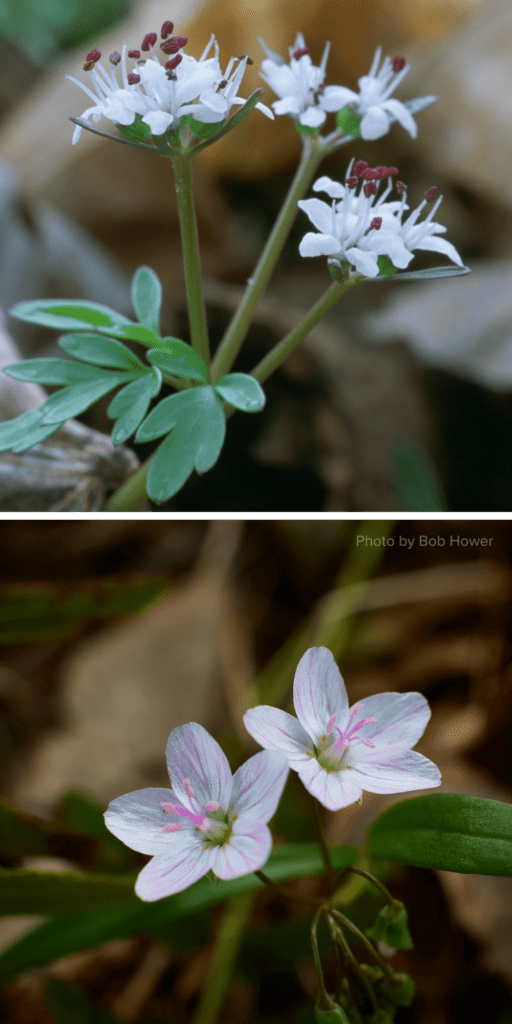
Harbinger-of-Spring (top), Spring Beauty (bottom)
In this blog article by Erin Kinnetz, our Assistant Director of Education, we learn that these shy beauties emerge before the trees have leafed out and while the forest floor is relatively bare. Rather than competing with trees and shrubs for nutrients and sunlight later in the season, they take advantage of a short window in early spring to flower and produce the food and seeds they need to survive.
Two species of spring ephemerals, however, are not so timid—at least when it comes to declaring their role as early spring bloomers by name:
Harbinger-of-Spring (Erigenia bulbosa): One of the first ephemerals, this delicate perennial is 1–4 inches tall and displays white flowers that are clustered in a compounded umbel, with stalks radiating out from the main stem like an umbrella. Each flower has five petals and purplish-brown anthers.
Spring Beauty (Claytonia virginica): Another early spring flower, this perennial plant is 3–6 inches tall with a pair of long, narrow leaves. The showy flowers have five petals with white and pink stripes.

Uncommon, not-quite-ephemeral wildflowers
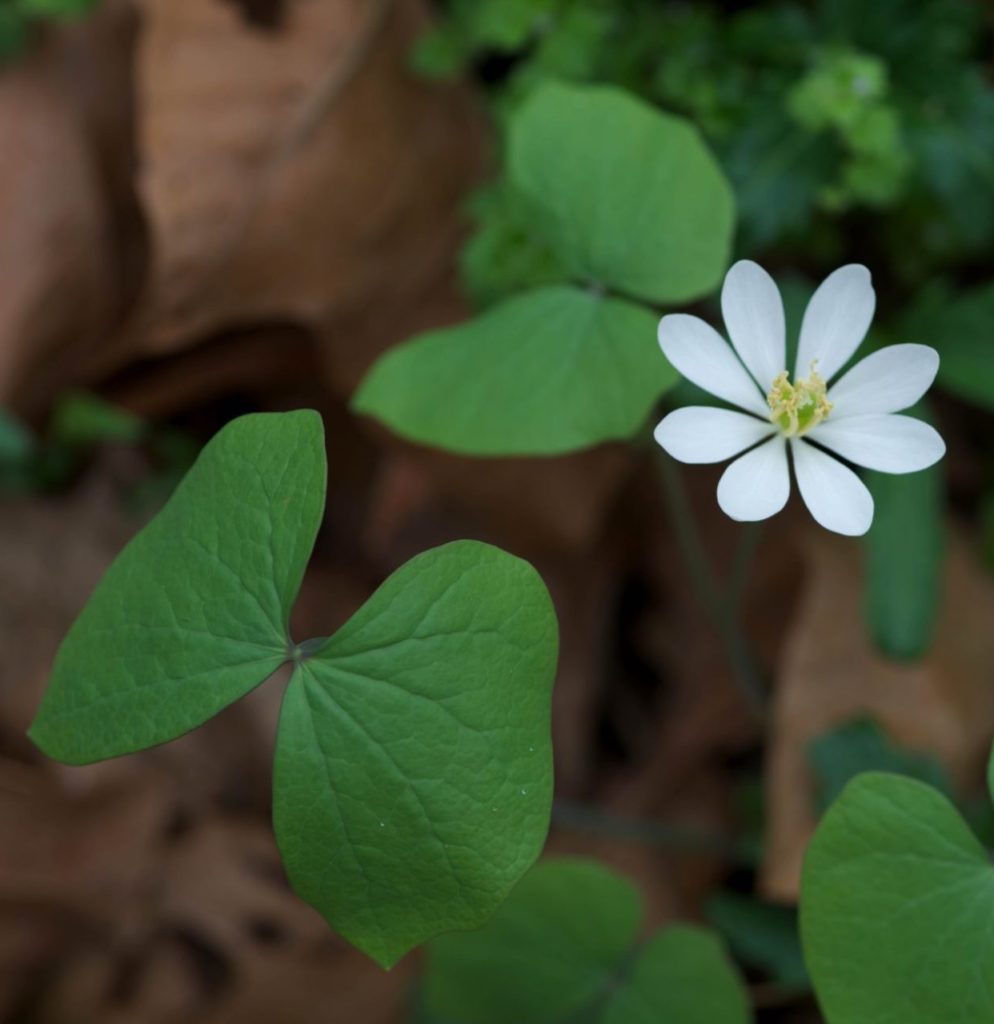
Twinleaf
In his article, “A Woodland Garden for the Ages,” author and gardener Bob Hill highlights the uncommon appeal of American twinleaf (Jeffersonia diphylla). Growing 8–20 inches tall, this plant features leaves divided into two wing-shaped leaflets.
The flowers are about one inch in diameter, have white petals (usually eight) with yellow stamens, and are solitary on a thin, leafless stalk.
While the delicate petals typically last only 1–2 days, the twinleaf is not considered a true spring ephemeral because its foliage remains green and spreads across the forest floor well into summer. Also, it appears later than the first ephemerals.
In The Parklands, it can be found in April–May on the Twin Leaf Ridge in the Moss Gibbs Woodland Garden, along with other steep hardwood slopes.
Beautiful, budding tree leaves
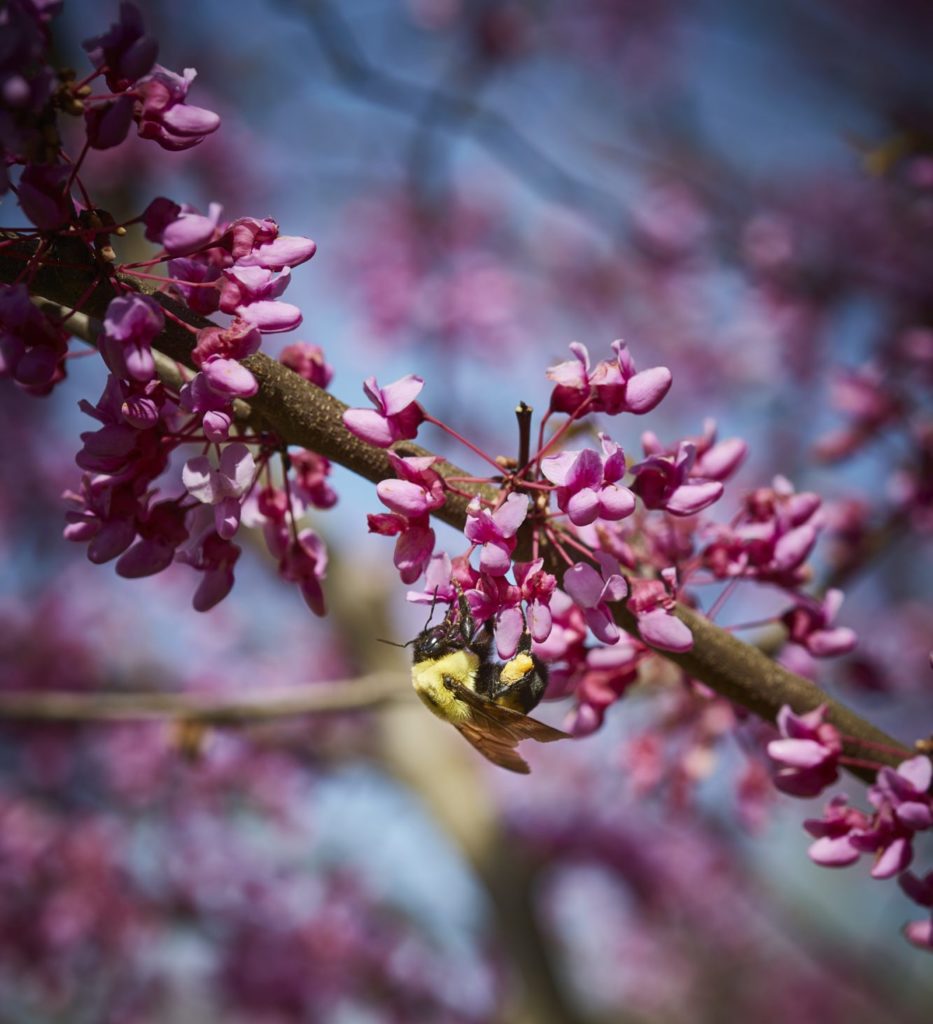
Small, leafy tree buds are another beautiful sign of spring. While the buds are present throughout fall and winter, they begin to swell and appear larger as the weather gets warmer.
In early spring, the eastern redbud (Cercis canadensis) is especially beautiful, producing clusters of pea-like pink flowers before leaves are visible. These trees can be seen throughout the park system, including Beckley Creek Park, Turkey Run bottomland, the southern portion of Pope Lick Park, and the Moss Gibbs Woodland Garden in Broad Run Park.
Spring greening across landscapes
Along woodland edges—especially in sunny, south-facing spots—tufts of green blades are beginning to push through the soil. As these early grasses and woodland plants emerge across the forest interior, shrubs and understory trees begin to awaken as well.
Peepers sounding off
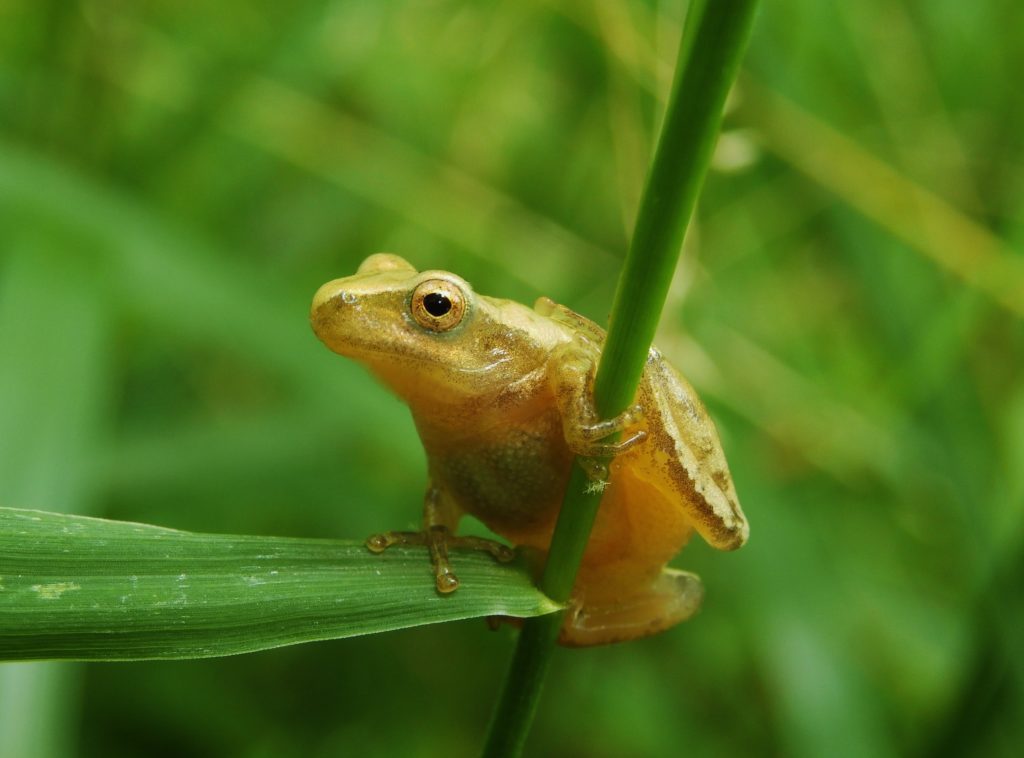
Spring Peeper
Tiny and well-hidden as these amphibians may be, their loud chorus is hard to miss on your morning run, walk, or hike near Floyds Fork. Their singing shows that these little frogs are ready for a warm season ahead.
Large cranes on the move
As sandhill cranes make their spring migration from Florida to their breeding grounds in Canada and Alaska, they are often seen and heard overhead in the parks. While their flight formation is usually a “V,” they may also travel in a straight line or in a swirling circular pattern called “kettling.” These large, graceful birds are most vocal during the morning hours.
In this blog article, Curtis Carman, Director of Education and Programming at The Parklands, recalls a moment when visitors witnessed a flock of sandhill cranes landing in the Humana Grand Allee Wetlands at Beckley Creek Park.
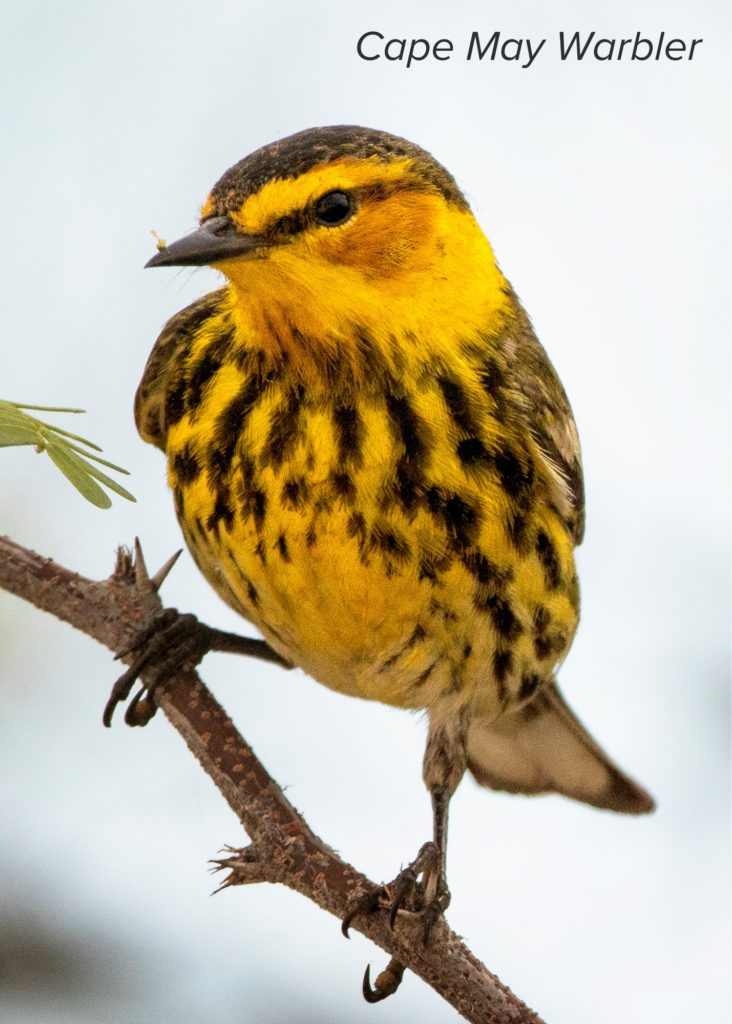 Small, bright, and cheery songbirds
A sunny day in the parks gets birds chirping and chattering—a sure sign that spring is in the air. Beginning in April, keep an eye out for neotropical songbirds like warblers and vireos as they pass through Kentucky during migration. Like many ephemeral blooms, these visitors are small—some weighing less than an ounce. Be sure to listen, too, since many have distinct and nuanced songs.
Your sign to do some sightseeing
Not sure where to begin your search for signs of spring? Make plans to explore the crushed stone Humana Grand Allee Trail with its wooden boardwalk or the gravel Black Willow Trail in Beckley Creek Park, where creek, forest, and prairie habitats will soon be bursting with signs that the season has arrived.
Looking for an outing in the southern parks? When the weather’s sunny and dry, try hiking or biking the Paw Paw natural-surface trail in Turkey Run Park. Or, take a leisurely stroll through the Moss Gibbs Woodland Garden. Find more sightseeing inspiration here.