
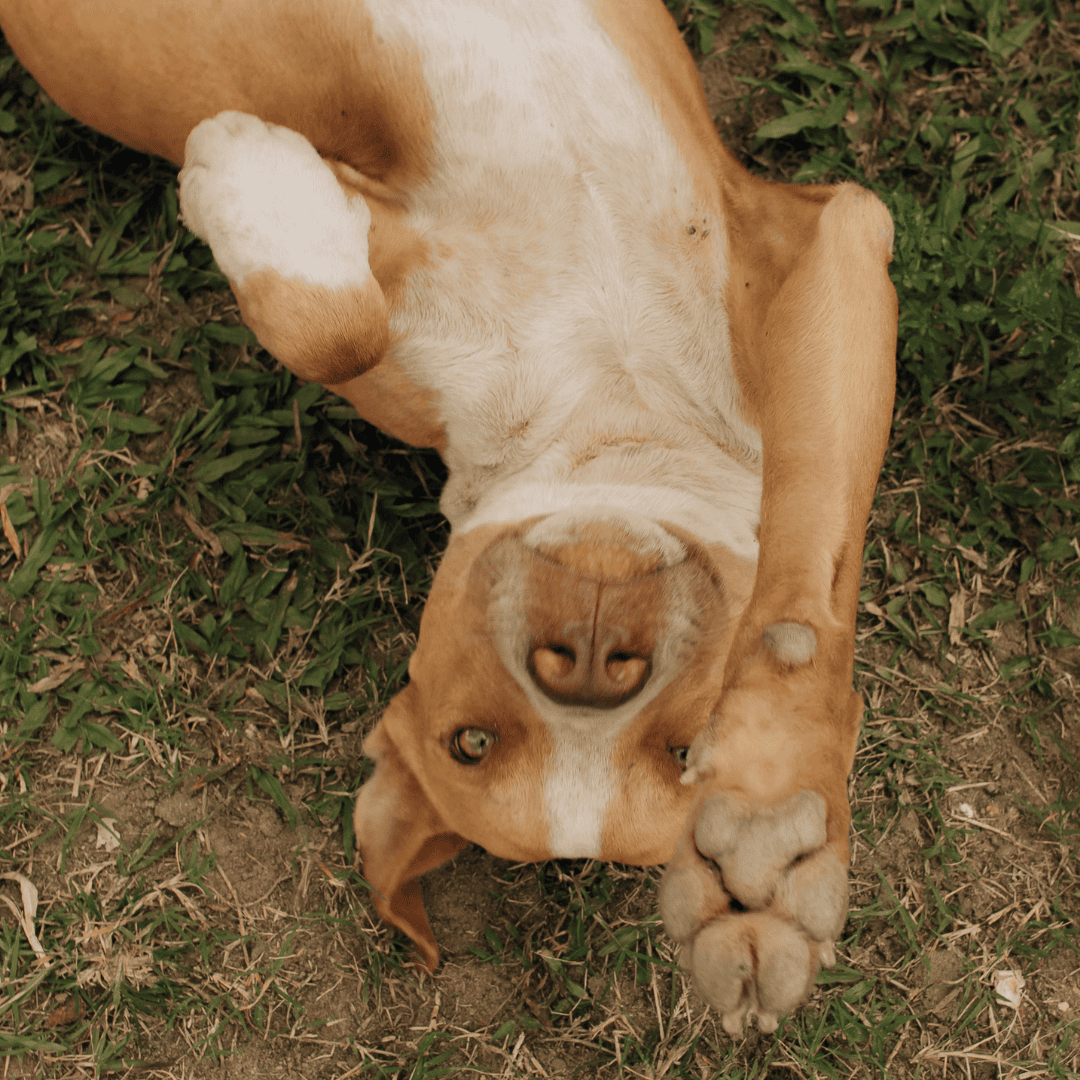
What you can learn about an animal from looking at its feet
I want you to compare your feet to your hands. What differences and similarities do you come up with? The obvious differences are their location on your body and that convenient opposable thumb on your hand.
But your hands and feet share more similarities than they do differences. The thumb is one of five fingers on each hand, and there are five toes on each foot. Below the fingers and toes are specialized layers of thick tissue. The palm of your hand is made up of metacarpal pads, and the arch of your foot is made up of metatarsal pads. These pads protect the bones that connect your digits to the wrist or ankle.
It’s almost like your feet and hands started with the same blueprint, but along the way, they changed to be better at performing different tasks, and that’s exactly what happened.

 First, a Little History
Millions of years ago, the first mammal had five toes on each foot, and that was the very first foot template for all the mammals in the world.
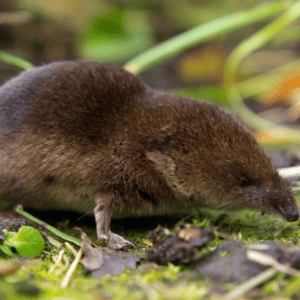
Researchers believe the modern shrew has the most similar foot structure to that of the first mammals, but over eons, animals took those blueprints and became their own architects, changing and molding to become more varied. However, if you look closely enough, you will see hints of that original model, the shared structures in all mammals. How amazing is that!
But why the change? The answer is survival. Humans, deer, squirrels, skunks, all of us do things differently. An example is how we may choose to eat spaghetti with a fork and soup with a spoon.
Animals have turned their feet into useful tools shaped over the ages to be perfect for their own unique ways of surviving. Which means looking at feet can tell a lot about an animal, so let’s take a look!
Five Categories of Animal Feet
 The Grabbers
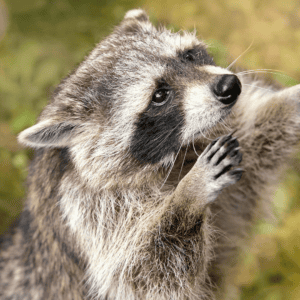
Grabbers use their feet and/or hands to grasp objects such as food or branches. They can often manipulate items very well, maybe too well for our liking, especially if there is food inside, say, a garbage can. Many animals in this group rely on their grasping abilities primarily to climb, so it shouldn’t be too surprising that these animals often live in trees.
They have long, flexible digits, which are good for hooking and curving around objects. Some even have opposable thumbs, which make them even more dexterous. Odds are, if they can touch their digits together, they are good grabbers. Touch all your fingers to your thumb and then imagine your dog or cat doing the same thing. There is a reason you can’t really shake a dog’s hand.
Animals in this category also have highly mobile joints in their hands and feet. Turn your wrist and then turn your ankle. Which one has more movement? Mobile joints allow digits to move more freely relative to one another, supporting fine motor skills and dexterity. Your wrists are more mobile than your ankles, making it easier to spread your fingers flat compared to your toes. Unlike your fingers, which can move independently, your toes are less flexible.
 The Runners
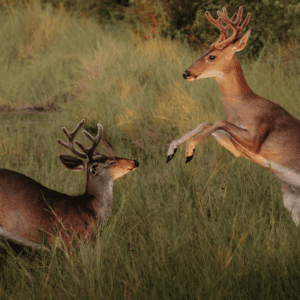
In a place like Kentucky, we should understand that hooves are the winning design for animals made for running speed and endurance.
A big fancy word for these types of animals is “unguligrade,” meaning “toe walkers.” Humans are “plantigrade,” walking with all the bones of our feet. Cats and dogs are “digitigrade” and walk on their digits, which is like people pretending to walk in high heels.
Unguligrade animals like horses and deer go even further, walking only on the tips of their toes. Like a ballerina in point shoes, these animals only walk on toes three and four, the equivalent of your middle and ring fingers. Their nails are made of the same material as ours, but they consist of thick, developed layers designed to provide protection and absorb shock. After all, it’s a lot of weight to support on just two toes.
The sharper and more pointed the hooves, the better they are at gripping the substrate, acting like spikes on a track shoe, an adaptation for speed. Compare a thoroughbred horse’s hoof to a Clydesdale’s. But how does walking on your tiptoes make you faster? Well, it makes the leg much longer. Imagine if your heel were where your knee is, and your knees were even higher up your leg! Having long legs helps them cover more distance with each stride and increases energy efficiency.
 The Hunters
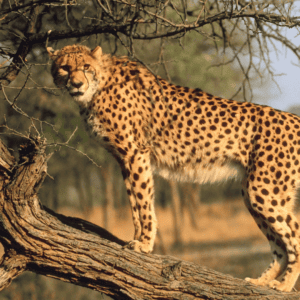
You may be thinking, animals with hooves aren’t the only runners. What about a cheetah? The fastest land mammal on earth, surely their feet are adapted for being fast. The difference is that their feet are not just adapted for running but also for taking down prey. The hunters’ feet are used for more than just running―they are fierce predators!
Many large carnivores must wear out or run down their prey first before delivering the final blow, and their feet tell that story.
As mentioned before, digitigrade animals, like cats and dogs, walk on their digits. Much like our unguligrade friends, this makes their legs longer, which makes them better at running. Have you ever looked at a dog’s paw and wondered what that pad that sticks out further up their legs was? That is the equivalent of our heels!
A hunter’s feet often have features like sharp claws or talons that assist in hunting. Naturally, felines make up a large part of this category. Often, their claws are retractable, which helps keep them sharp for just the right occasion, like gripping loose soil or the backs of their prey.
 The Diggers
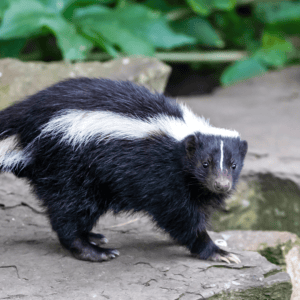
Some hunters focus on smaller prey, like tracking insects. Which means some mammal feet are adapted for digging. Diggers have feet with long claws and/or fingers that are stuck close together.
While these animals will never win awards for best jazz hands, they do make pretty good shovels, ideal for scooping soil. This not only comes in handy when hunting for critters underground, but many animals also must move substantial amounts of dirt to burrow and build complex tunnel systems that help them stay safe.
 The Swimmers
Our final category may take you back to your early school days, when you were taught about a duck’s webbed feet. Swimmers have large flaps of skin between their digits. This helps them manipulate water, turning and gliding through it like a paddle or a fish’s fin.
Speaking of fins, what about mammals that have fins, like whales, seals, and dolphins? You may think there is no way our hands and their flippers could have any similarities, but think again! Structurally, their flippers contain all the same bones as our hands and feet. Their elongated finger bones are covered with a layer of skin, and in dolphins and whales, their legs remain as tiny bones inside their bodies that they no longer use.
Indeed, things got weird when mammals started living in water full-time, but the structures remained the same.
So, our feet and hands have always told a story about what we do and who we are.
Final Footnote
In this blog, we focused on mammals, but we could widen the lens. We could go back before mammals to a common ancestor that mammals, reptiles, amphibians, and birds shared and from which they inherited their limbs and digits. Meaning that we could also find far more similarities between species!
Fun Activity for the Whole Family
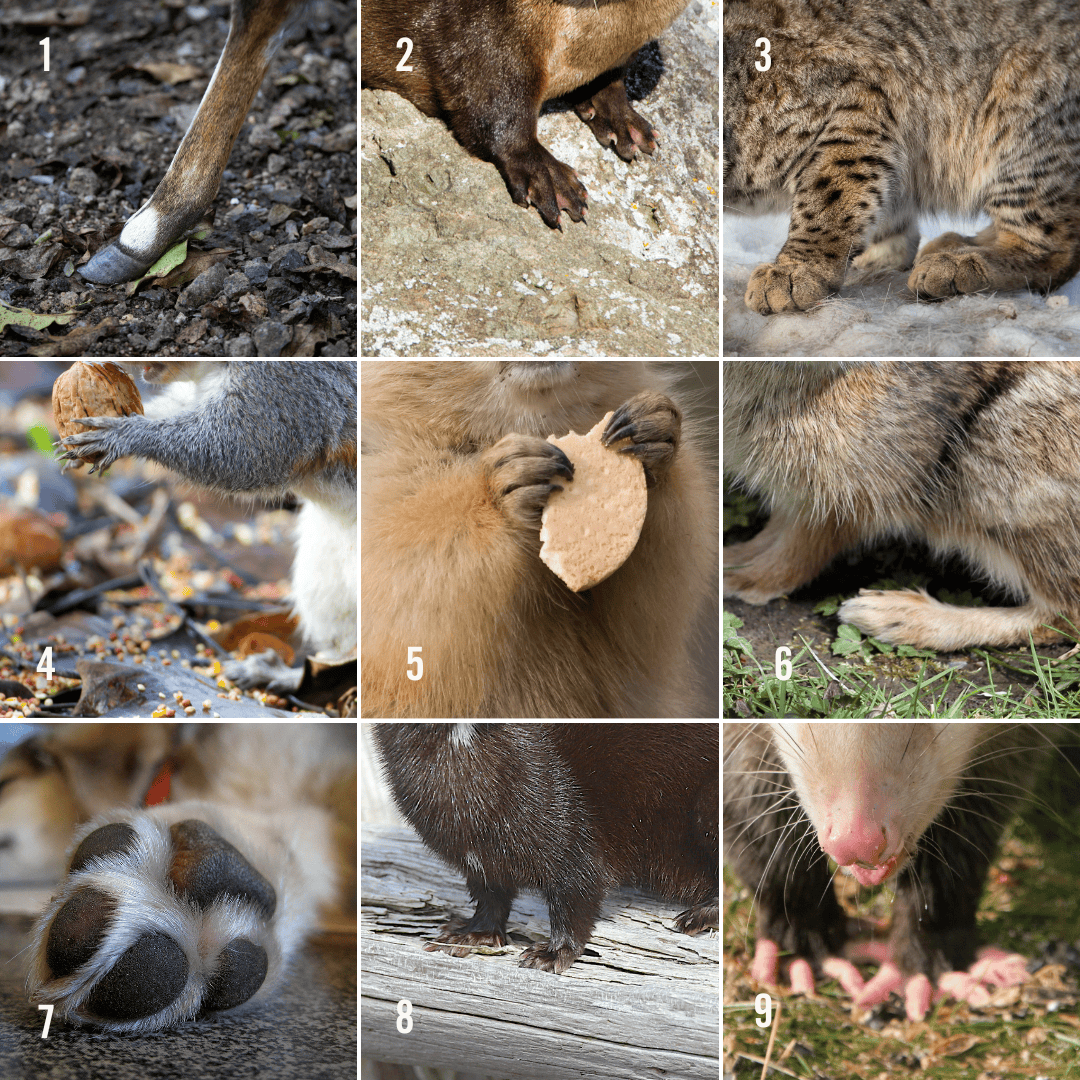
Here, we’ve included some pictures of animal feet. Try putting them in the categories described in the article: the grabbers, the runners, the hunters, the diggers, and the swimmers.
As you look for clues in the photos, keep in mind that over the millions and millions of years animals have been on this planet, they have found some unique and downright strange ways to survive, and their feet tell you so.
You may find that you don’t know or that some feet may belong in two different categories, like a spork, doing the job of a spoon and a fork. That is exactly the way it is supposed to be! Biology loves diversity, and it’s almost impossible to put all of nature in nice, clean boxes. There are always exceptions to the rules.
If you’d like to know the answers, view them on this PDF Answer Sheet.
To learn more about the shapes and other characteristics of wildlife tracks, and get started in interpreting these footprints, you may want to read, “Mammal Tracks & Sign: A Guide to North American Species” by Mark Elbroch, with contributions by Casey McFarland.