
What ‘Connecting with Nature’ Looks Like at The Parklands
Landscape architect Frederick Law Olmsted believed parks were essential within urban settings, connecting people to nature and each other. The vision of The Parklands is to extend that legacy into the next century.
But what does it really mean to “connect with nature,” and what does that look like at The Parklands? It’s not the equivalent of meeting a new friend over coffee, though it’s not so far off either. It’s the feeling you get when you step into a natural, beautiful outdoor space like the Egg Lawn and feel invigorated or inspired by your surroundings.
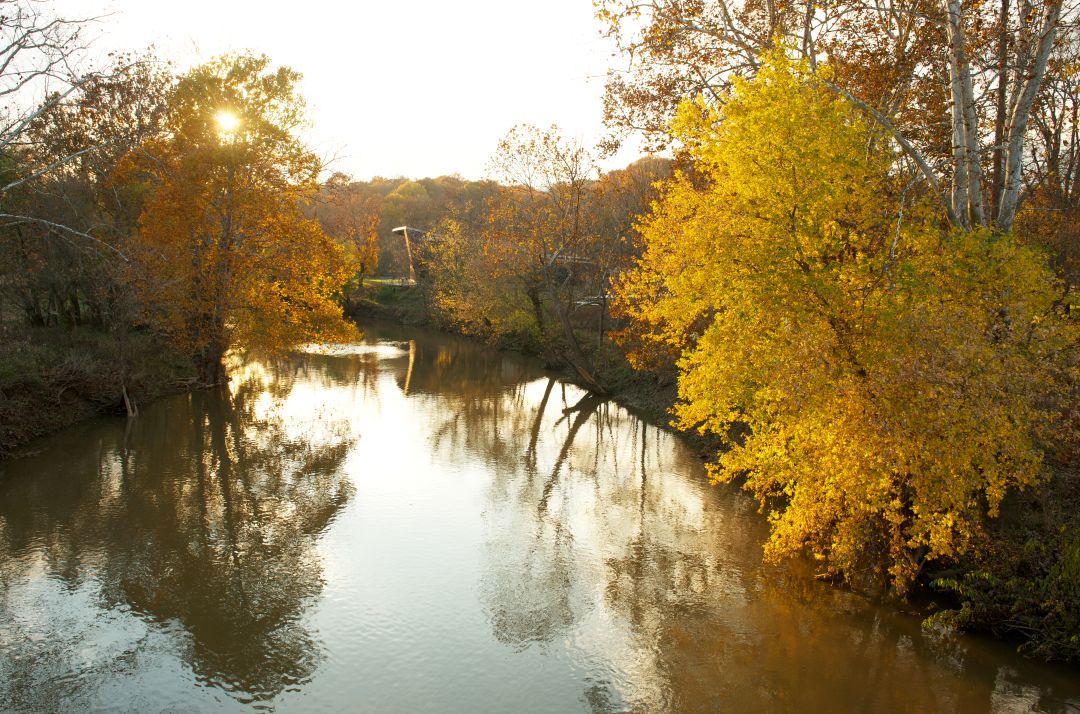
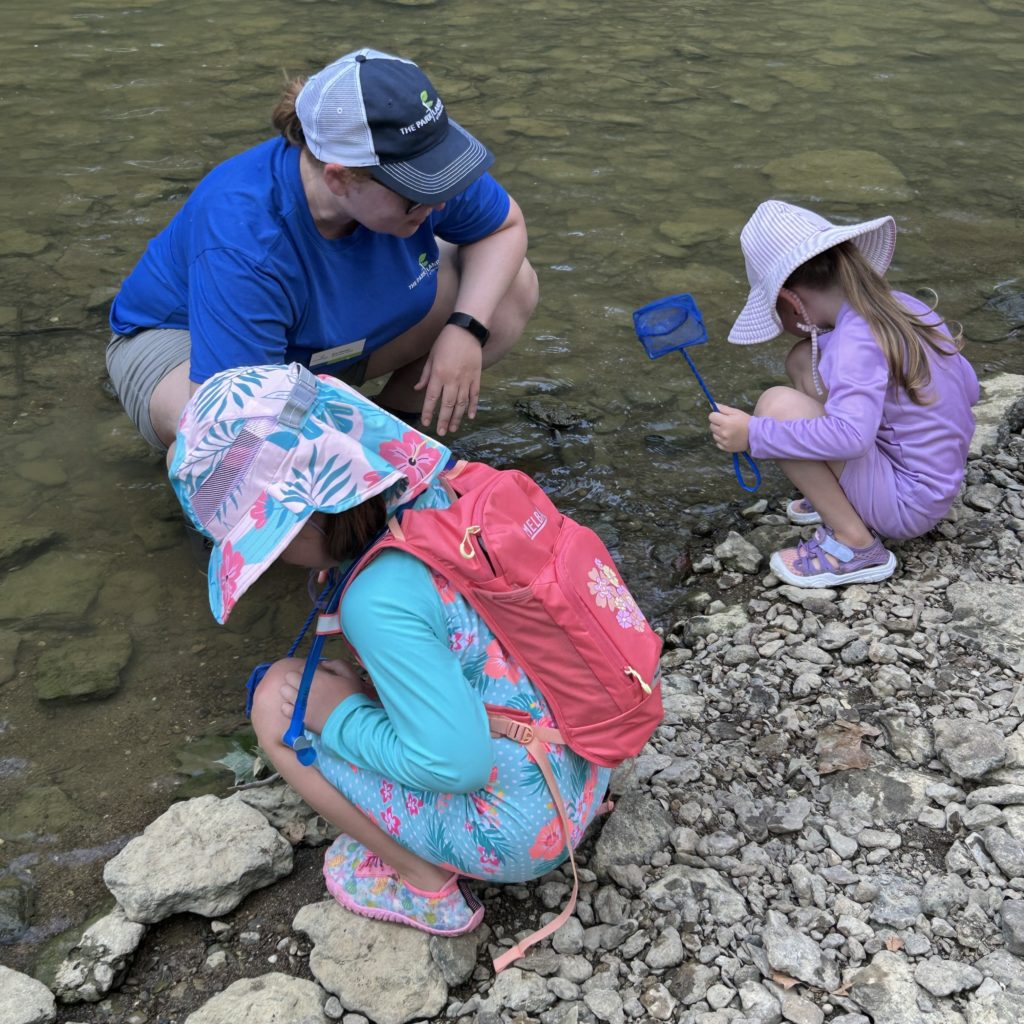
That connection can be a moment of awe that takes your breath away, like catching a glimpse of a fogbow of diffused white and yellow light above Floyds Fork. But it doesn’t require an encounter with rare phenomena. More often, it’s an experience that’s simple, personal, and joy-filled, creating a small spark that deepens your appreciation of nature, leaves you feeling changed in some way, and draws you back outdoors seasonally, weekly, or even daily, bringing about lifelong benefits as a result.
This is where nature’s real power lies. It becomes both a source of inspiration and well-being.
Connections rooted in Olmsted philosophy
Olmsted’s vision of bringing nature into neighborhoods and providing everyone with access to public parks drove the design and construction of some of our nation’s greatest public parks—Central Park and Prospect Park in New York City, as well as Louisville’s own Olmsted Parks, including Shawnee, Iroquois and Cherokee. While The Parklands wasn’t designed by Frederick Law Olmsted or his sons and isn’t part of Louisville’s Olmsted Park System, the Olmsted philosophy inspired the project from the very beginning and continues to guide us today.
As a system of connected parks connecting people with nature and shaping the city’s urban edge, The Parklands of Floyds Fork offers spaces to learn, play, explore, celebrate and more.
Connections that take shape in all kinds of ways
 Learning about the natural world
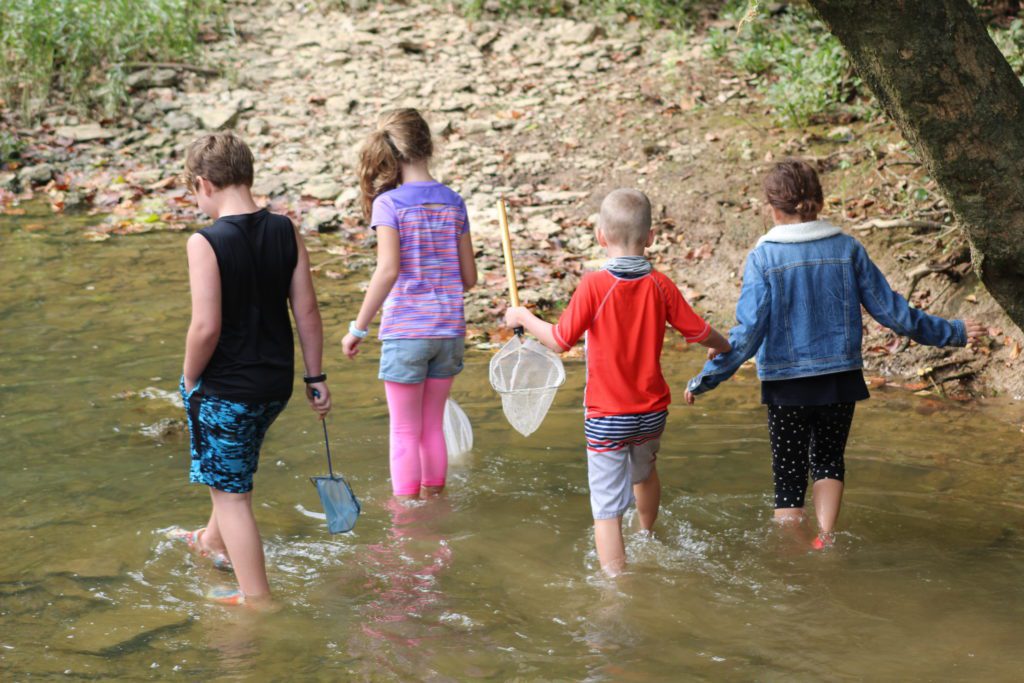
Nature has much to teach us—and so do our park staff and guest hosts during learning events. Every year, The Parklands provides tens of thousands of educational experiences through a wide range of programs. From school field trips, seasonal day camps, and weekly Wednesday Wonders to community-wide events like the Great Backyard Bird Count and Earth Day Fest, learners of all ages are able to connect with nature in fun, meaningful ways.
New for 2026 is our Wee Walking Club―a free, relaxed, nature-based meet-up designed for adults with babies and toddlers in tow. These walks are the perfect way to get outside, connect with nature and other caregivers, and introduce your little ones to the wonders of the natural world. Each week features a new trail, under a mile and a half, all paced just right for little legs and conversation. Find more information on these walks here.
Want to explore on your own? Trailhead kiosks and signs throughout the parks can help guide you. Bring your binoculars and a curious eye. By noticing the clues in forests, meadows, and prairies, you’ll start to recognize the plants and landscapes of The Parklands.
Finding wonder through play and exploration
Something magical happens when kids connect with the wonders of nature through play and exploration. Curiosity grows and happiness flourishes. This is especially evident at our playgrounds in Beckley Creek, Pope Lick, and Broad Run Parks.
The Marshall Playground in Beckley Creek Park and Cliffside Playground in Broad Run Park are open year-round, and the water at the spraygrounds at both locations is turned on from May through September, weather permitting. The Cliffside facilities were designed as an accessible, integrated space that allows for creative play and problem-solving for children of all abilities. We have “toddler” and “big kids” sections, but anyone can find summertime delight here. (Who doesn’t love water cannons and a three-loop spray tunnel?)
Getting a vital dose of ‘green exercise’
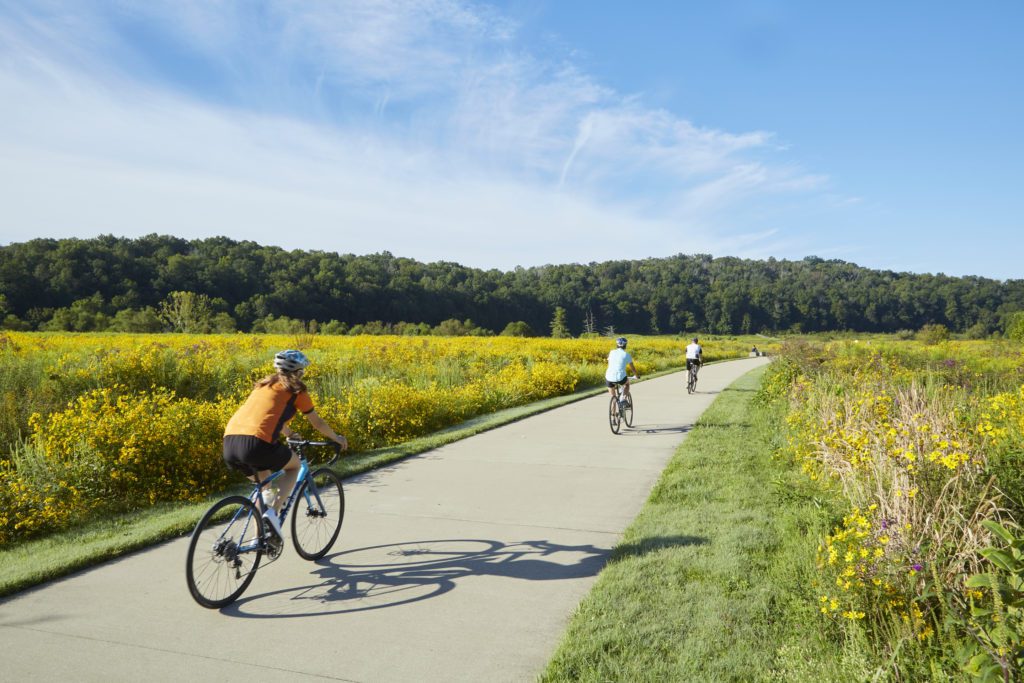
According to the American Council on Exercise, “Green Exercise”―physical activity that takes place in natural settings like parks―can be more impactful for improving both cardiovascular and mental health than exercise performed in non-natural environments. Findings from five key studies highlighted in the article also show that the presence of water can further enhance these benefits.¹
At The Parklands, spanning more than 4,000 acres, recreational amenities include hiking and biking trails, sports fields, fishing lakes, community gardens, and more. With the Floyds Fork stream running the full length of the park system, visitors can also enjoy paddling and explore miles of restored wetlands and stream banks. For information on the park’s seven designated access points and recommendations for a great paddling experience, visit our Paddling page.
Celebrating with family and friends
From reservable picnic pavilions to event sites and sprawling outdoor lawns, we’ve got plenty of venues where you can just hang out or host an event. The light-field rooms of the Gheens Foundation Lodge in Beckley Creek Park are perfect for weddings and other special occasions. The Hockensmith Barn in Turkey Run Park is another idyllic space for wedding ceremonies. Learn more here.
 Mixing business with nature
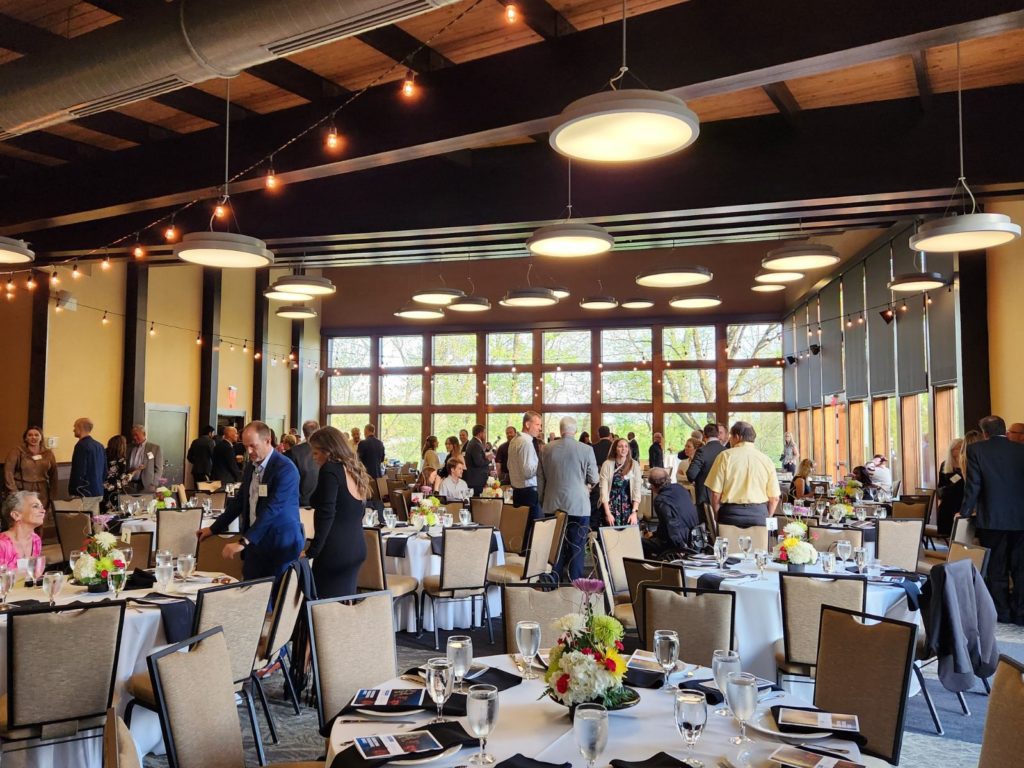
A change of scenery can make a world of difference for your team. Our unique, inviting spaces make it easy to exchange ideas, build camaraderie, and enjoy the beauty of nature. If one of your meeting goals is to have fun, we can help make that happen. Many groups we’ve welcomed build time into their agendas for participants to enjoy the parks together—or on their own. The Parklands is the perfect setting for the “come for the meeting, stay for the parks” experience.
Reconnecting with yourself
After a hectic workday or week, the parks can be a wonderful place to relax and check in with yourself. You might pause along the Floyds Fork stream, listening to the water flow and feeling the sun on your face. Or you can take in the natural surroundings from one of the many benches found throughout the parks.
Seeing where past meets present meets future
The Parklands of Floyds Fork is named after a waterway that is eons old. Native Americans once hunted along its banks, and the Big Beech Woods in Pope Lick Park predates European settlement. Even today, some roadways follow the general paths of early farm roads that existed long before motorized travel.
Across the park system, tangible remnants of this Kentucky history remain, from stone paths tessellated with fossils to angled stone walls that echo the region’s agricultural heritage.
One such remnant is the Walnut Grove in The Strand, where black walnut trees grow in neat rows. Planted by The Parklands, these trees bring new life to an orchard first cultivated by farmers more than 30 years ago. Today, ongoing care and new plantings are strengthening this vital space so it can thrive for future generations.
While special places like Walnut Grove tell a beautiful story of agriculture and history, they are also rooted in the present and point toward the possibilities of the future.
 Great parks connect people with nature and each other. The Parklands does this by design—four connected parks linked by a circulatory framework of pathways and iconic special places. Some areas are natural and preserved, while others were thoughtfully planned and built. All are free to enter and open to the public 365 days a year.
At The Parklands, opportunities to connect with nature are available to people of all ages and abilities and take shape in myriad ways. They might look like a quiet walk, spotting an animal, or sitting near the water, as well as countless other experiences you may never have considered.
There’s no one single pathway to connecting with nature at The Parklands. Instead, the possibilities are yours to discover, imagine, and make your own.

Source: 1) American Council on Exercise, “Green Exercise: The Benefits of Outdoor Exercise and How to Get Started,” acefitness.org, June 4, 2024