

Savor the Magic of May in Full Bloom at The Parklands
May is a magical time for viewing flowers at The Parklands. Meadows and grasslands are now filled with white penstemon. From a distance, observe how sunlight filters through the plants’ tall floral spires. Or step closer along the trails to admire these and other blooms throughout our landscapes, where colors, petal structures, and textures reveal themselves in detail. Even bracts and foliage can add striking dimension to a plant’s display.
If you’re planning a visit to see May blooms, we invite you to explore the landscapes and garden areas for flowers highlighted in the sections below.
Cue the trumpet-shaped flowers
The beautiful, sprawling abundance of May flowers at The Parklands is worthy of fanfare. So it seems fitting to spotlight a few of the season’s trumpet-shaped blooms:
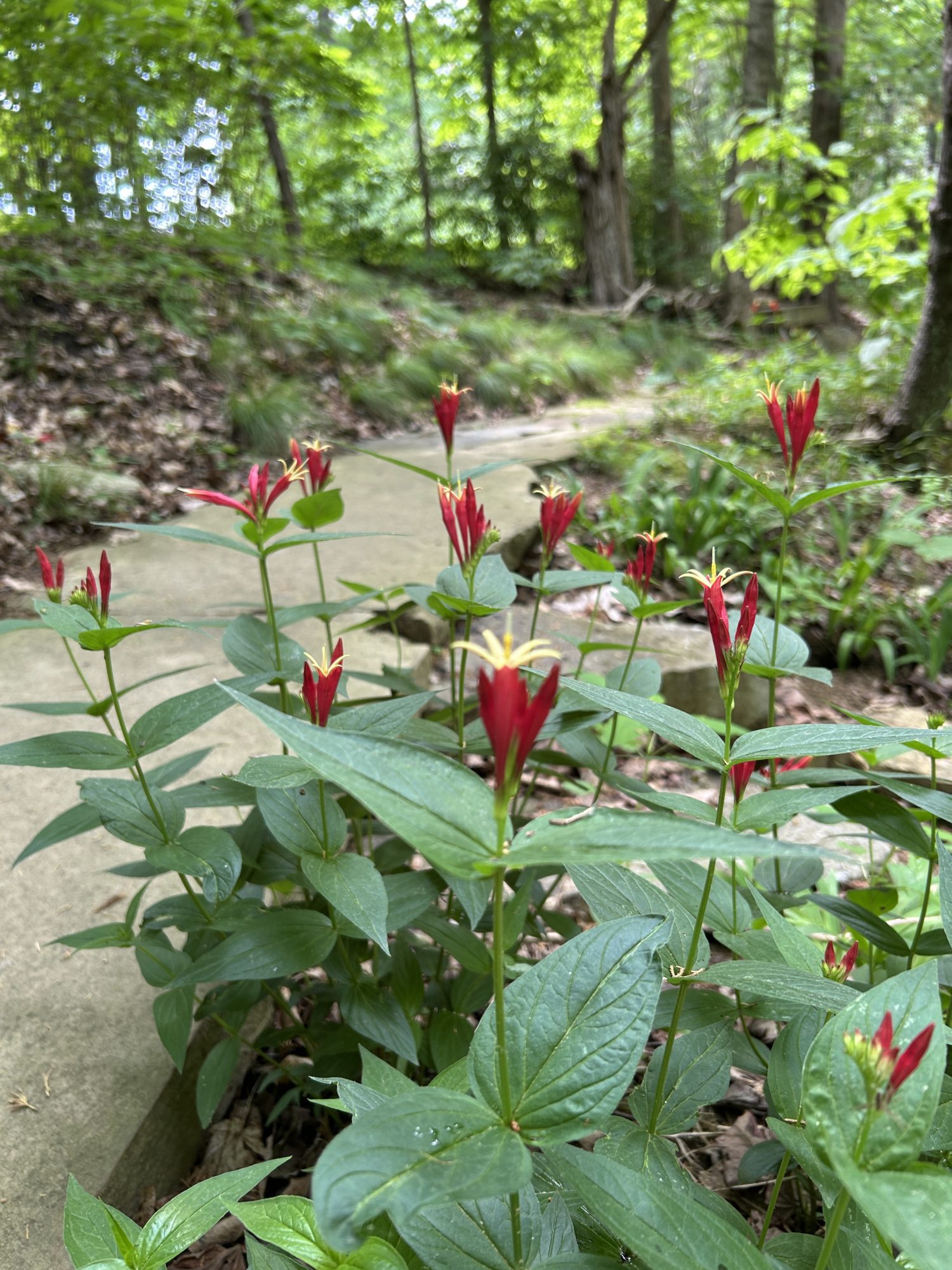
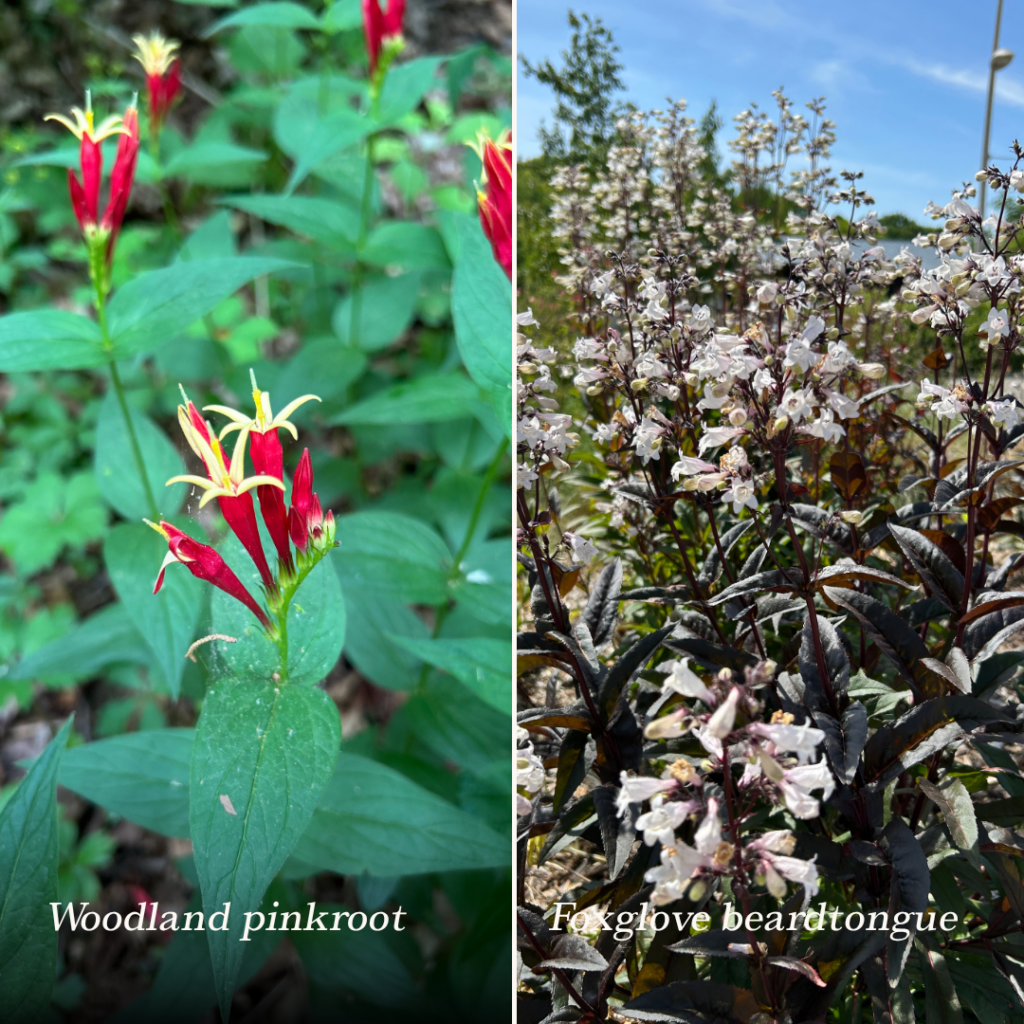
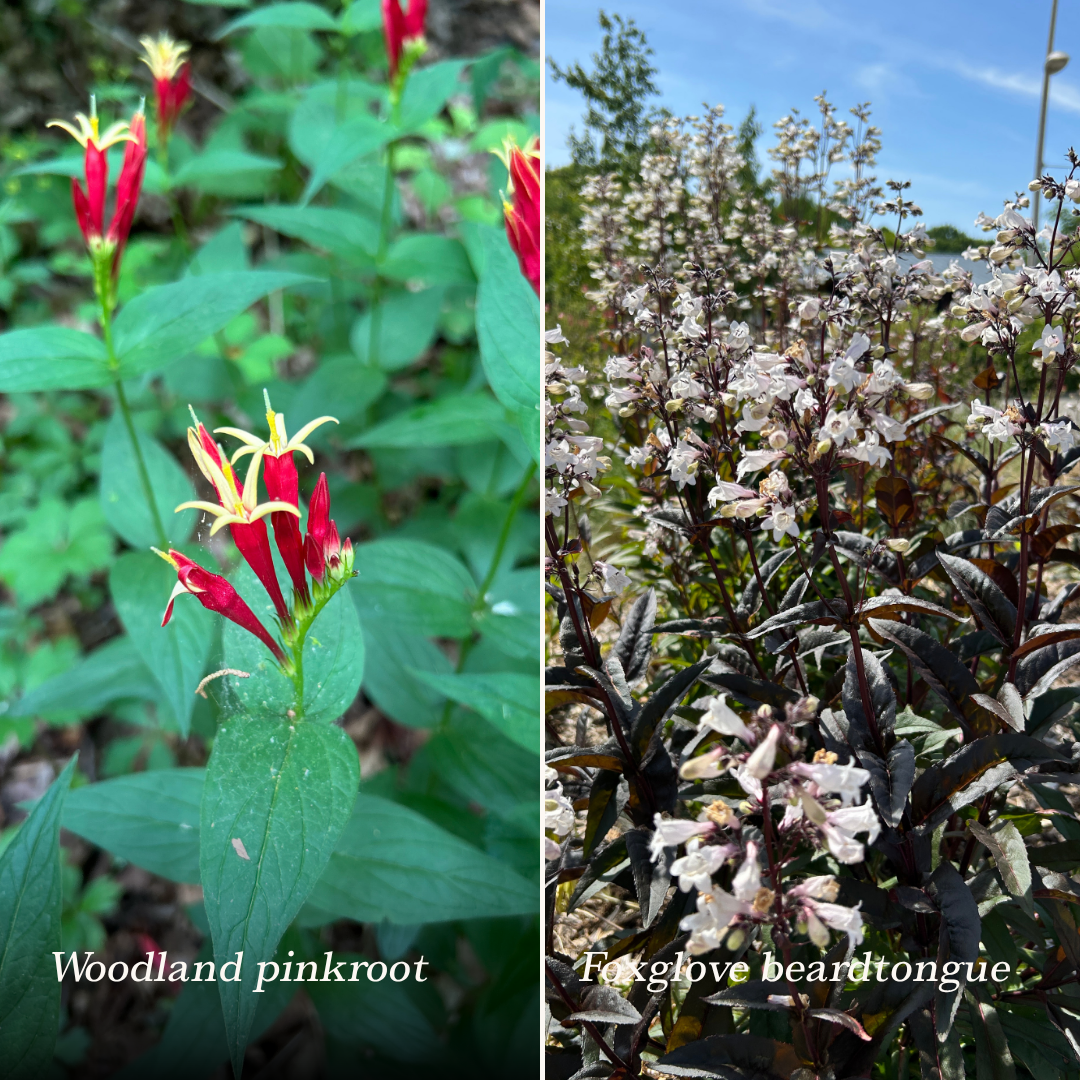
Woodland pinkroot (Spigelia marilandica) is a native wildflower with elongated, vibrant red tubular flowers that flare open to reveal a contrasting yellow center. It grows in compact, upright colonies along stream banks and in moist wooded areas, such as the Moss Gibbs Woodland Garden in Broad Run Park.
Foxglove beardtongue (Penstemon digitalis) features clusters of smaller, trumpet-shaped white flowers along tall stems that can take on a purple tint. These native perennials are abundant in meadows and landscapes throughout the parks.
Pendant-like wild columbine
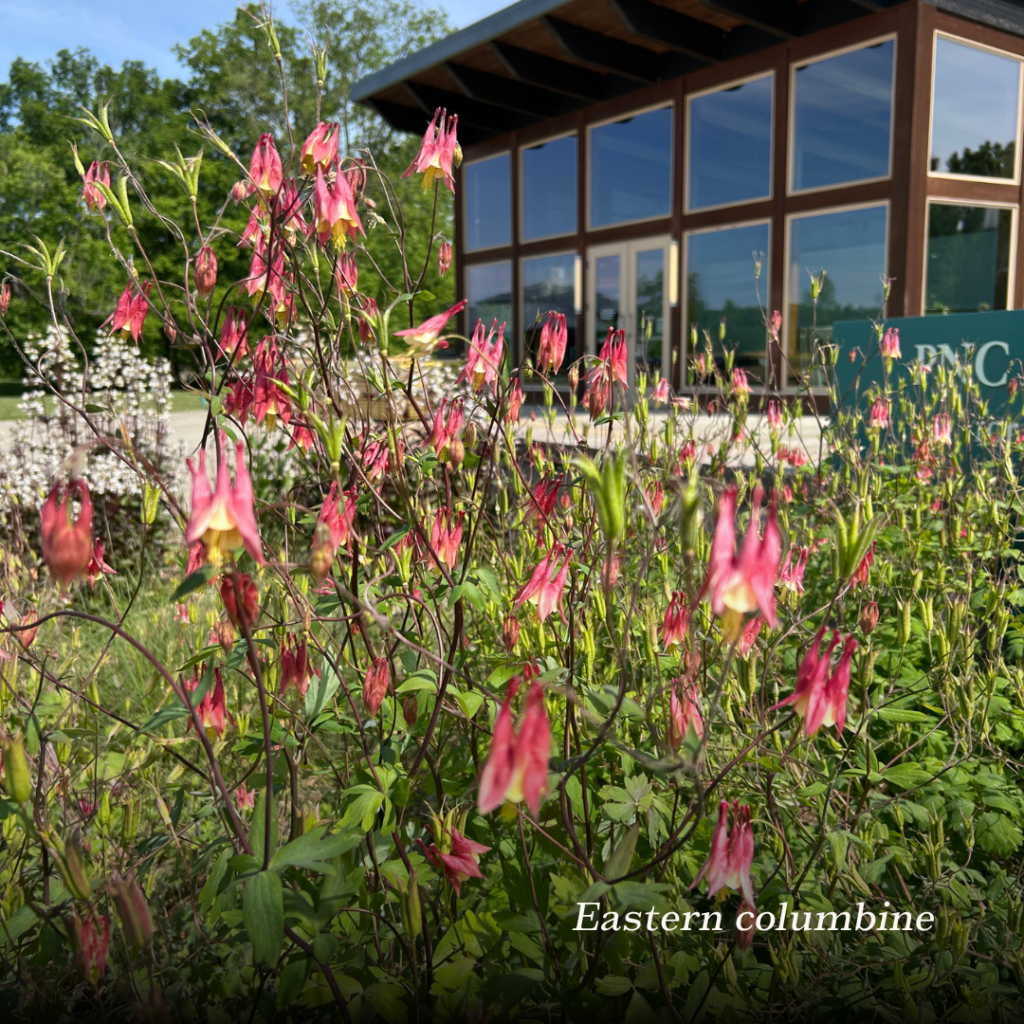
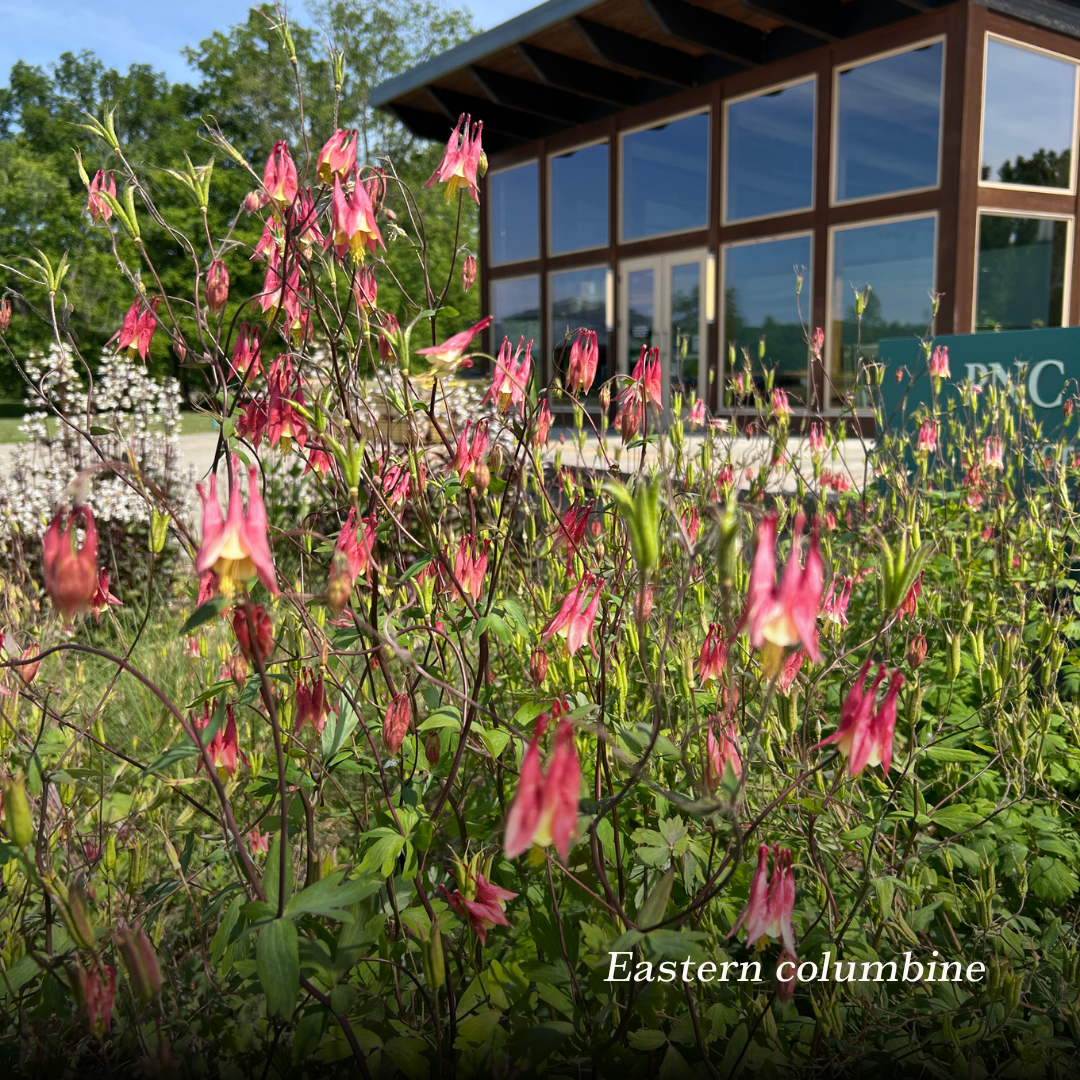
Unlike upright tubular flowers like the pinkroot, eastern columbine (Aquilegia canadensis) dangle downward in a delicate, airy form. Their red and yellow blossoms feature nectar-filled spurs that make them especially attractive to hummingbirds. They can be found in the Creekside Center and Humana Grand Allee in Beckley Creek Park and in the Moss Gibbs Woodland Garden in Broad Run Park, along with woodland edges.
Snowbells and ‘Blue Ice’ are cool and captivating
With spaces called “Big Woods” and “Cathedral of Cedars,” the Moss Gibbs Woodland Garden offers a shaded pathway to enjoy spring’s lush beauty. Even snow and ice make an appearance here—at least in the names of two plantings:
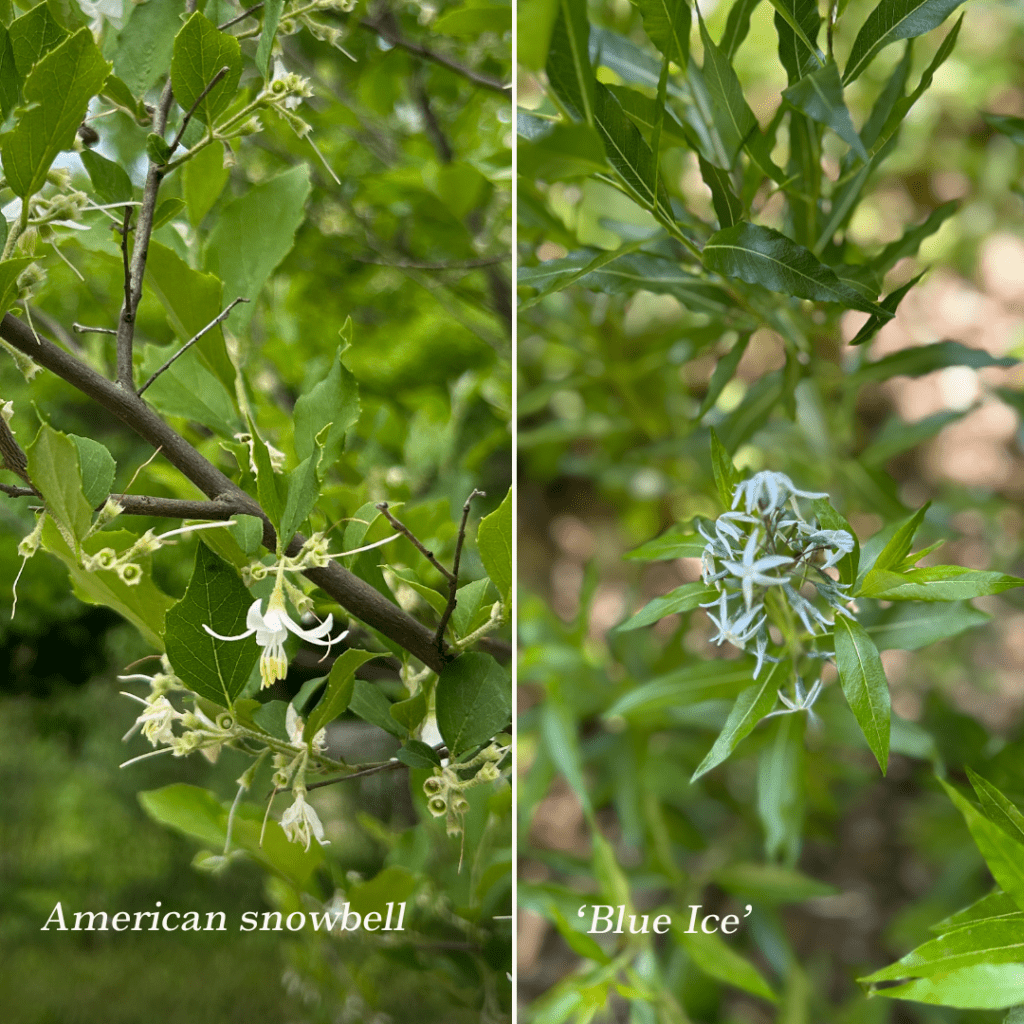
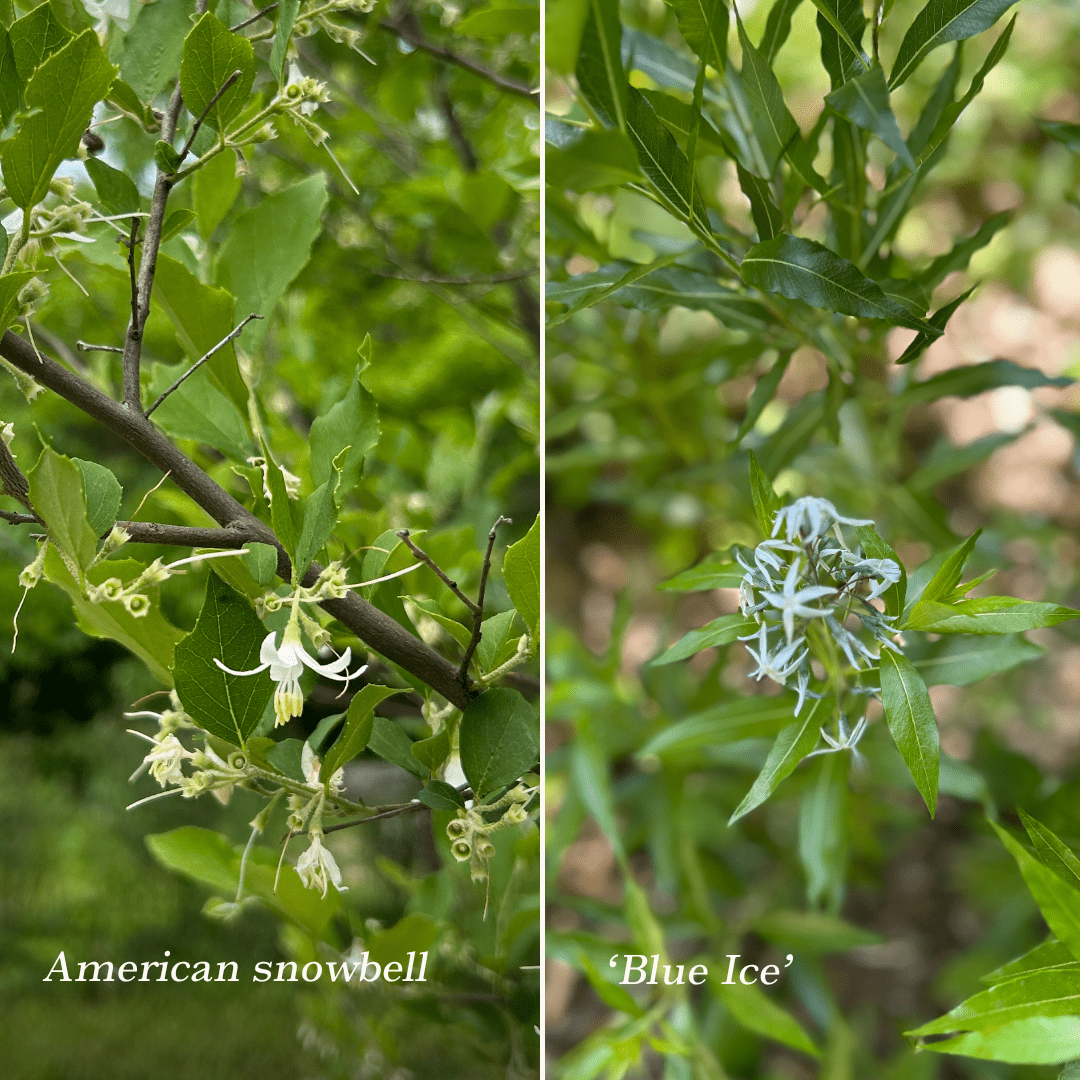
American snowbell (Styrax americanus). When in bloom, this native understory tree is covered with white, bell-shaped flowers.
Amsonia ‘Blue Ice’ (Amsonia tabernaemontana) brings elegance and starry interest to the ground layer along the edges of the garden. Its five-petaled, star-shaped blossoms are a cool periwinkle-blue.
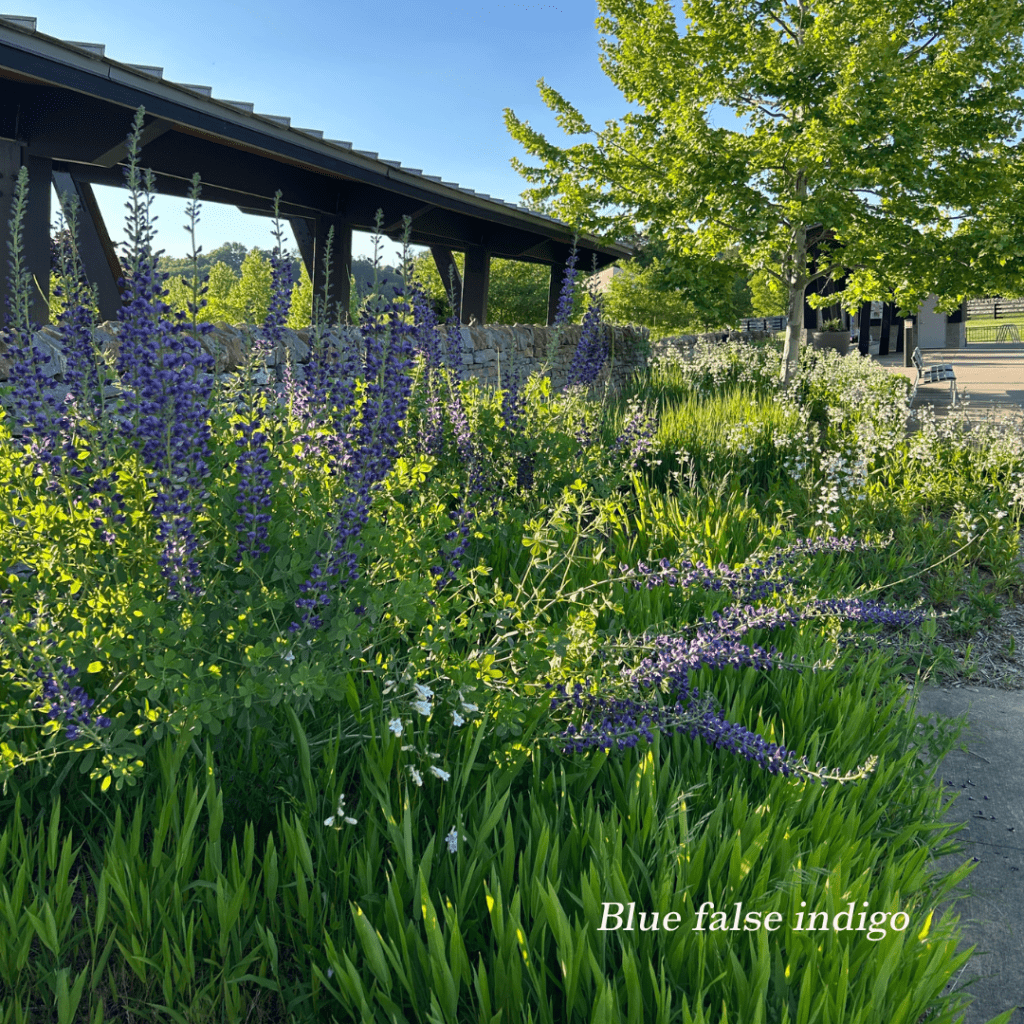
Vertical, beautiful Baptisia
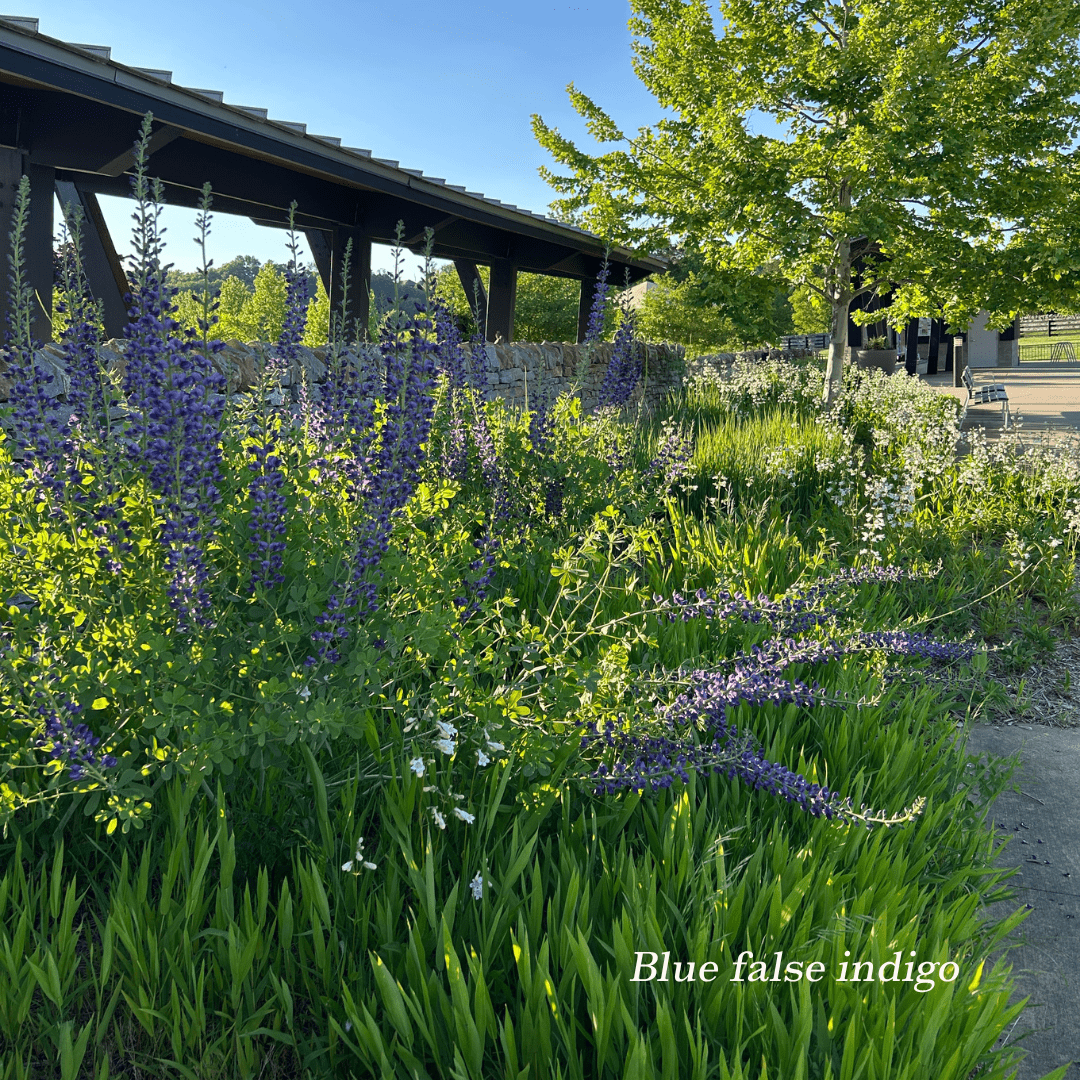
Blue false indigo (Baptisia) is a native perennial known for its vertical flower spikes and blue-green to gray-green foliage. Its indigo-blue, pea-like blooms appear across meadows throughout the parks and in planted landscapes at the Cliffside Center in Broad Run Park.
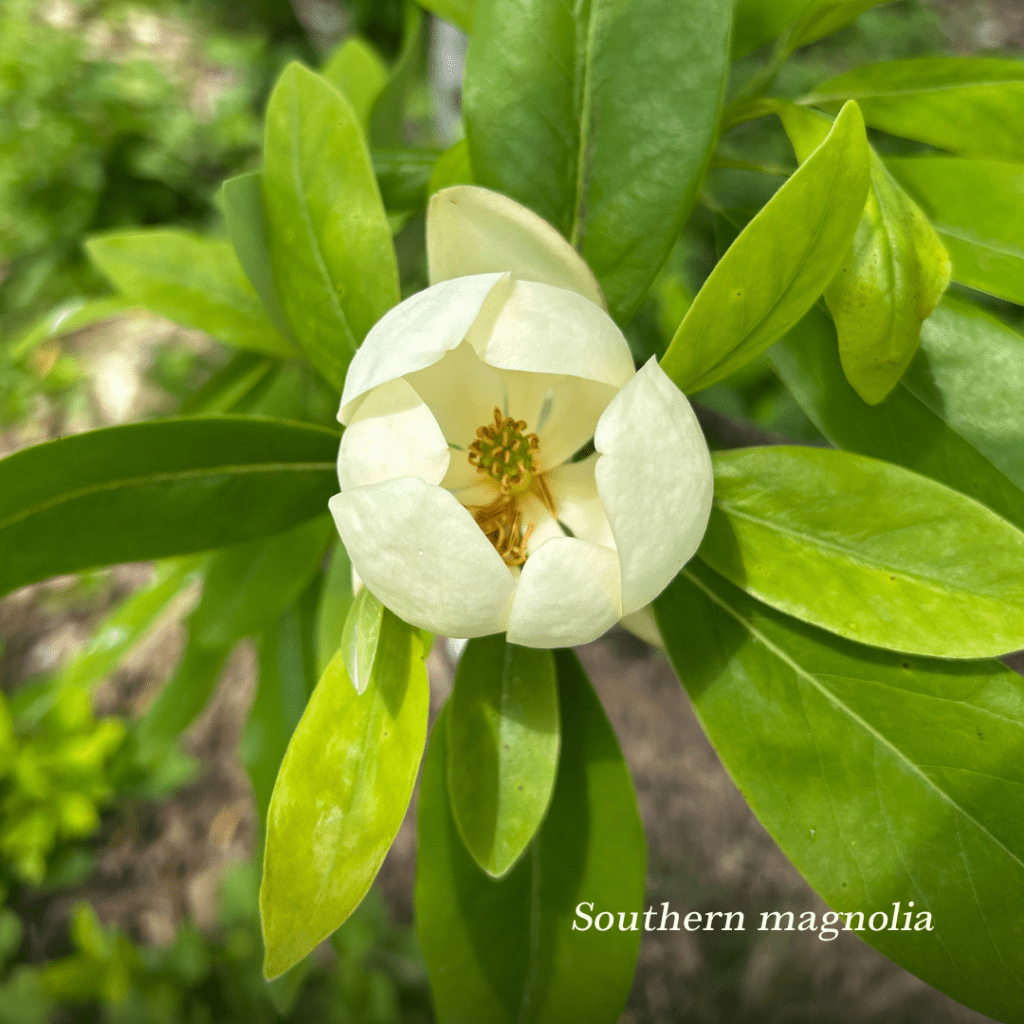
Large, bold magnolia blooms
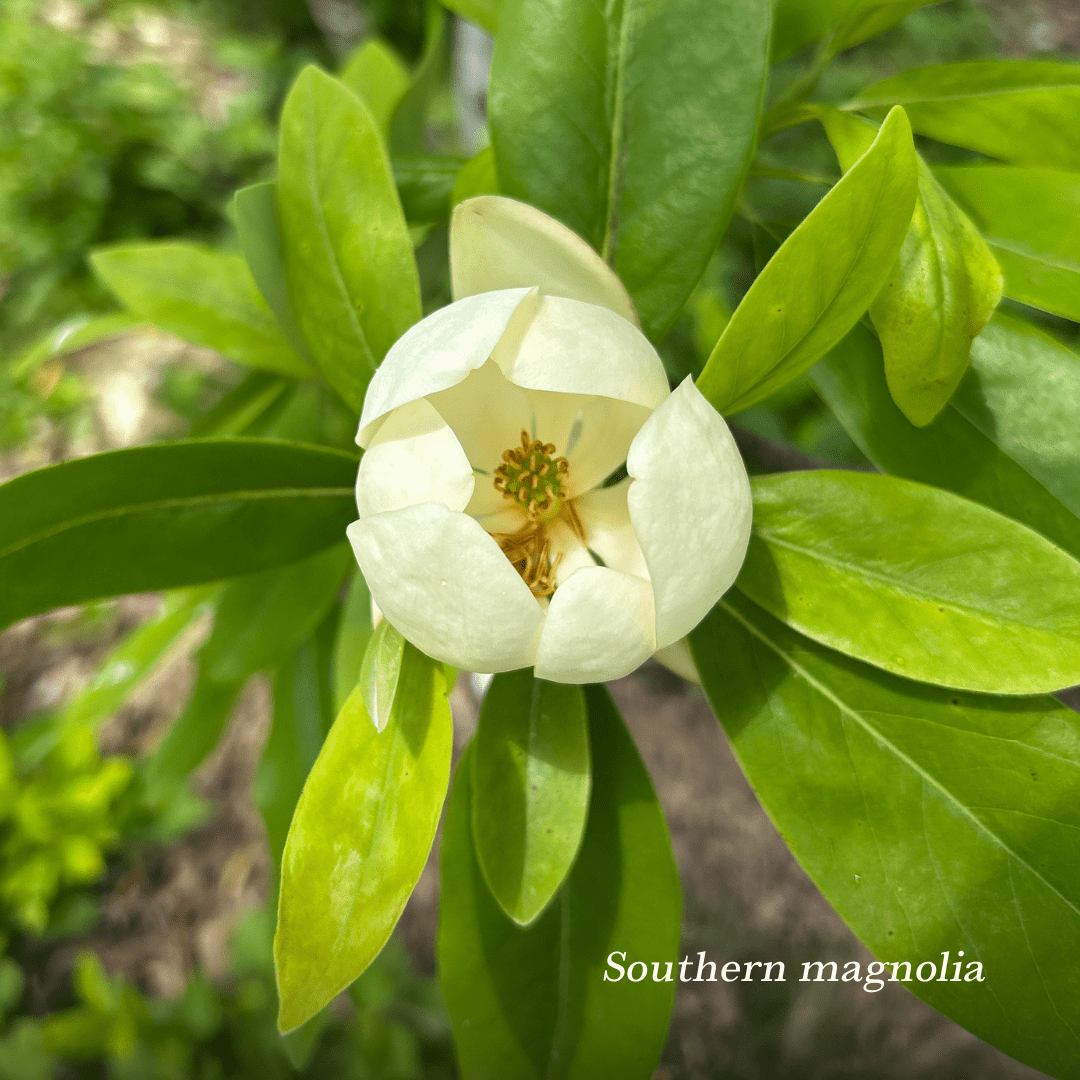
The southern magnolia (Magnolia grandiflora) trees near the Woodland Garden are thriving and showing off their ebullient blooms. Soon, the bigleaf magnolia (Magnolia macrophylla) inside the garden should produce blooms as impressive as its large, oblong-obovate leaves.
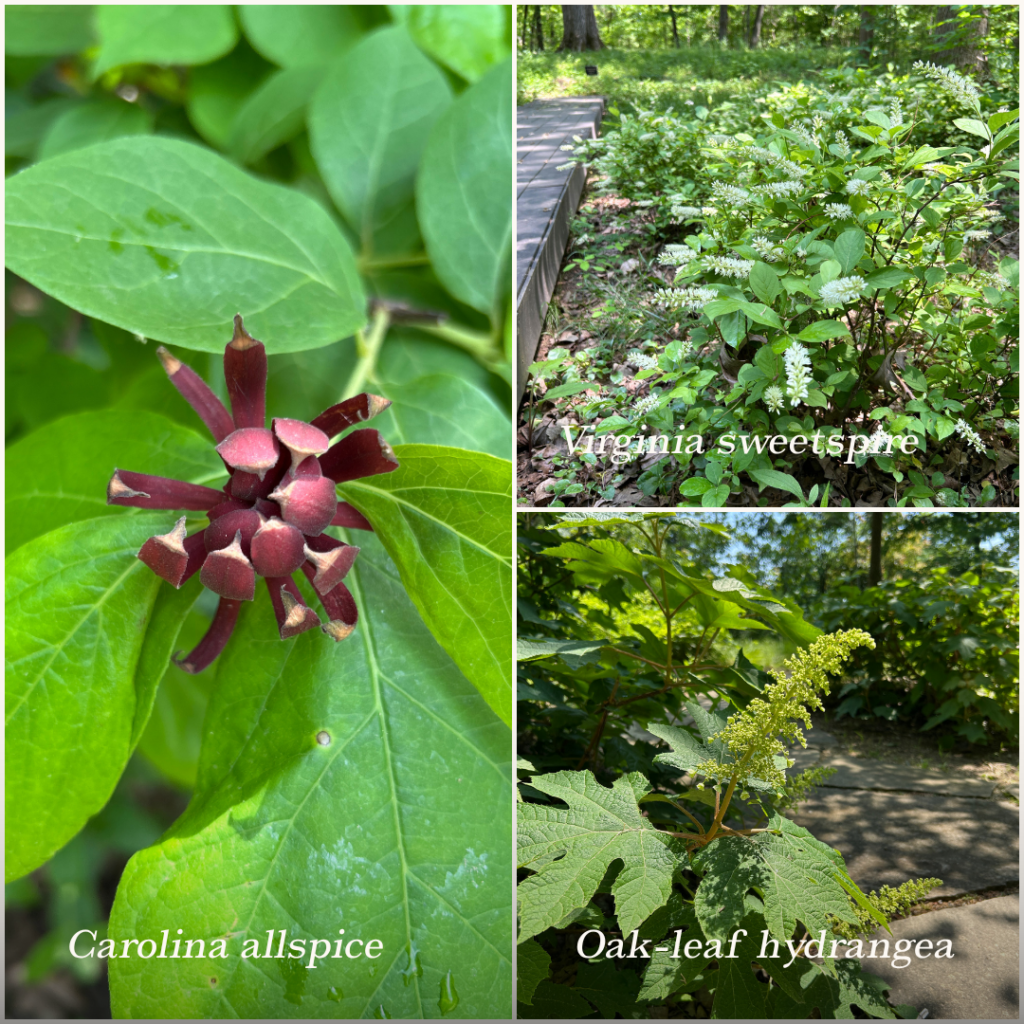
Spicy and sweetly alluring flowering shrubs
A variety of shrubs are also in bloom, especially in and around the Moss Gibbs Woodland Garden:
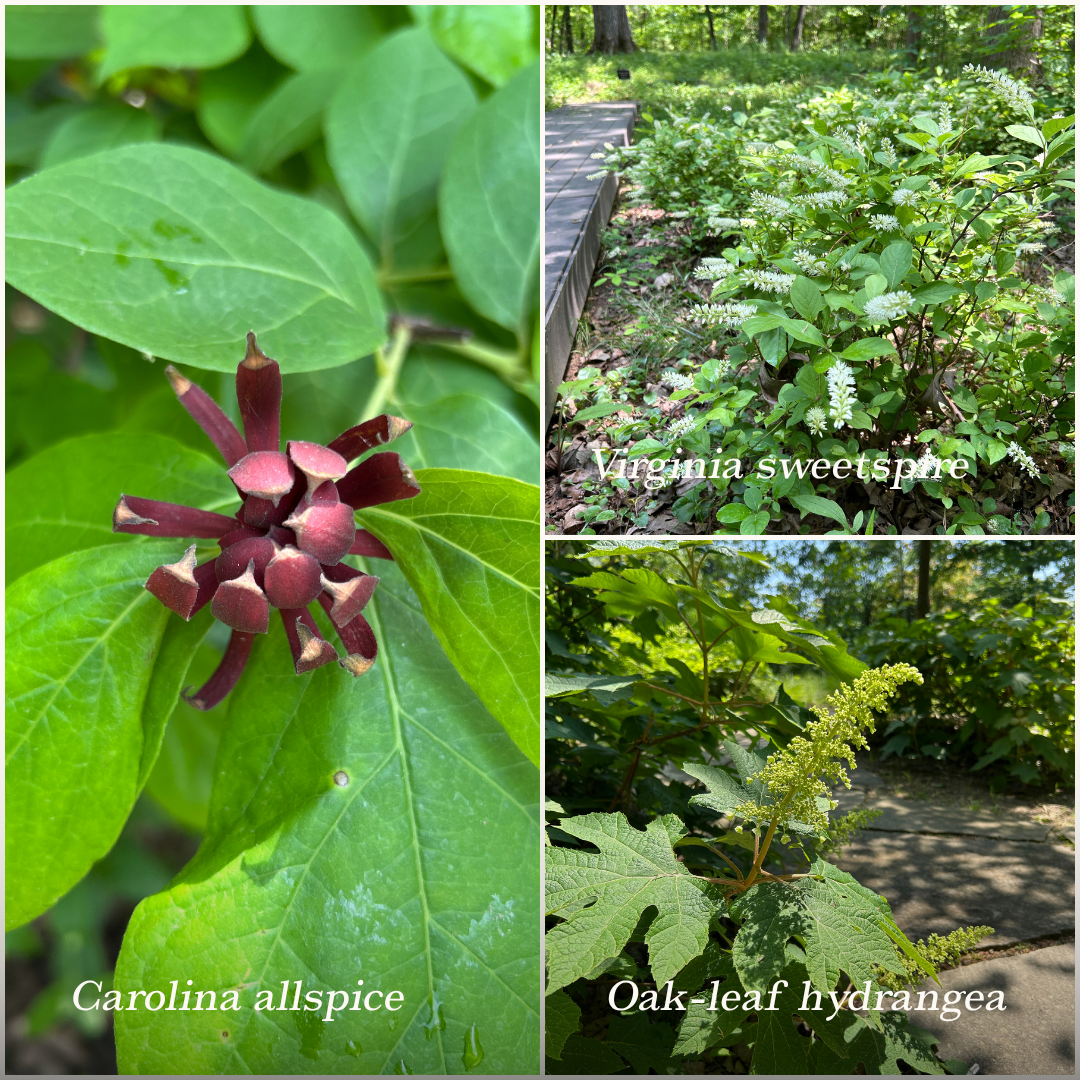
Carolina allspice or eastern sweetshrub (Calycanthus floridus) delights with distinctive, strap-like maroon flowers that appear almost carved in texture. This understory shrub is also known for its fragrance that carries notes of strawberry and clove, though the scent can vary from plant to plant.
Virginia sweetspire (Itea virginica) has elongated, cylindrical clusters of flowers (racemes) that cascade from the stems in a fountain-like effect. The result is both dramatic and graceful. These deciduous shrubs can be found throughout the parks.
Oak-leaf hydrangeas (Hydrangea quercifolia) are just beginning to come into bloom. It produces cone-shaped flower clusters (panicles) that open creamy white and often age to pink or tan. Its foliage resembles the lobed leaves of an oak.
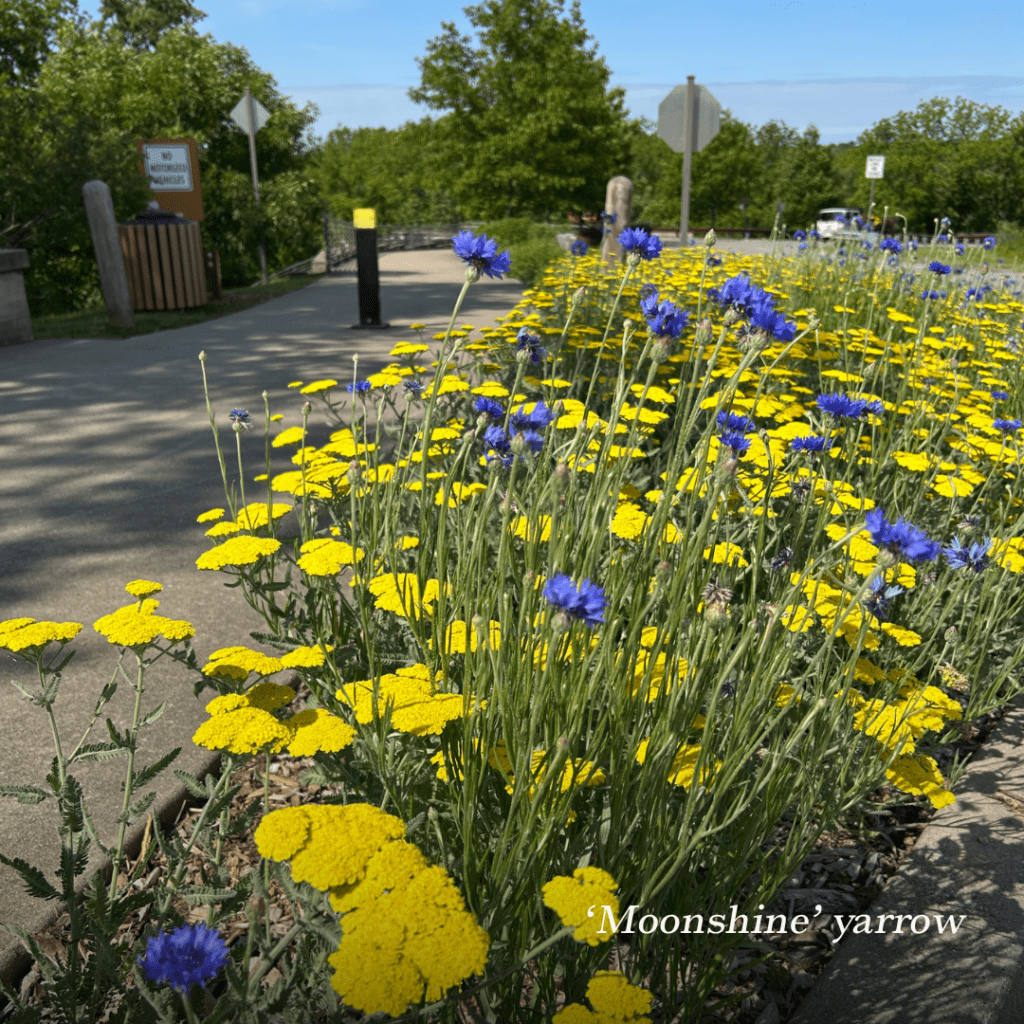
Hello, ‘moonshine’ yarrow
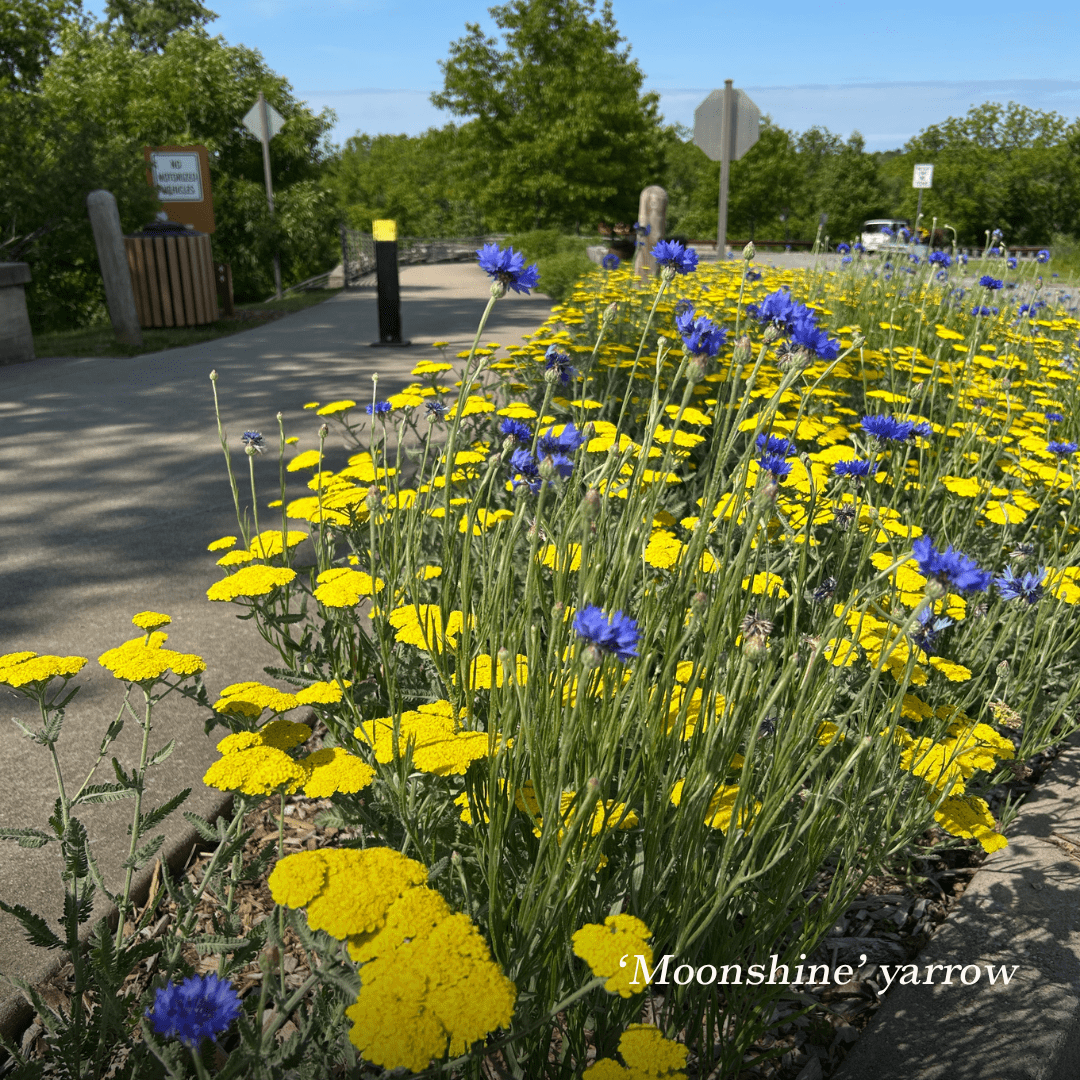
‘Moonshine’ yarrow (Achillea ‘Moonshine’) is blooming luminously along the south entrance to Beckley Creek Park, at the corner of Echo Trail and English Station Roads. It has been planted in a cultivated garden bed with taller cornflowers (Centaurea cyanus) for visual variety.
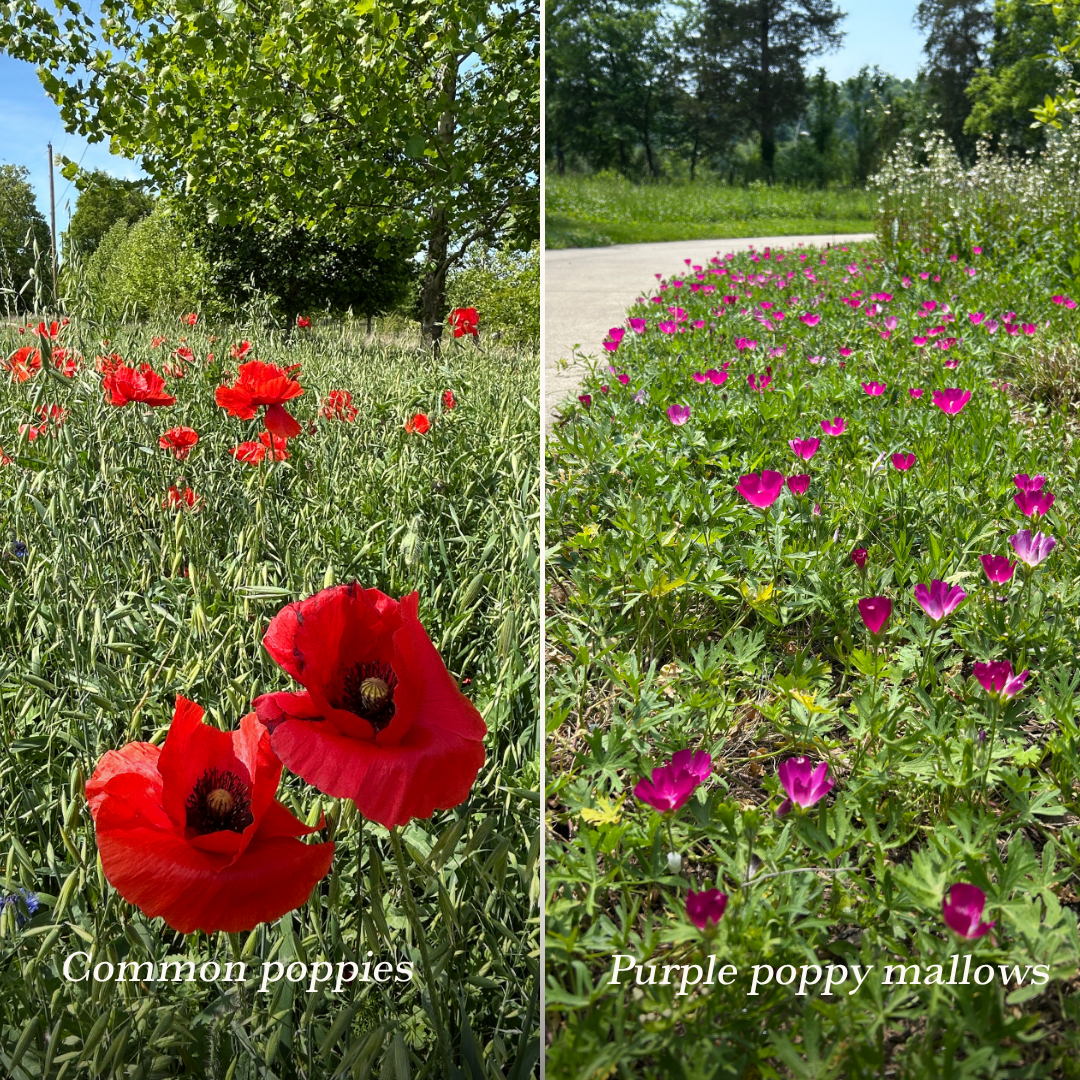
Bright red and magenta poppies
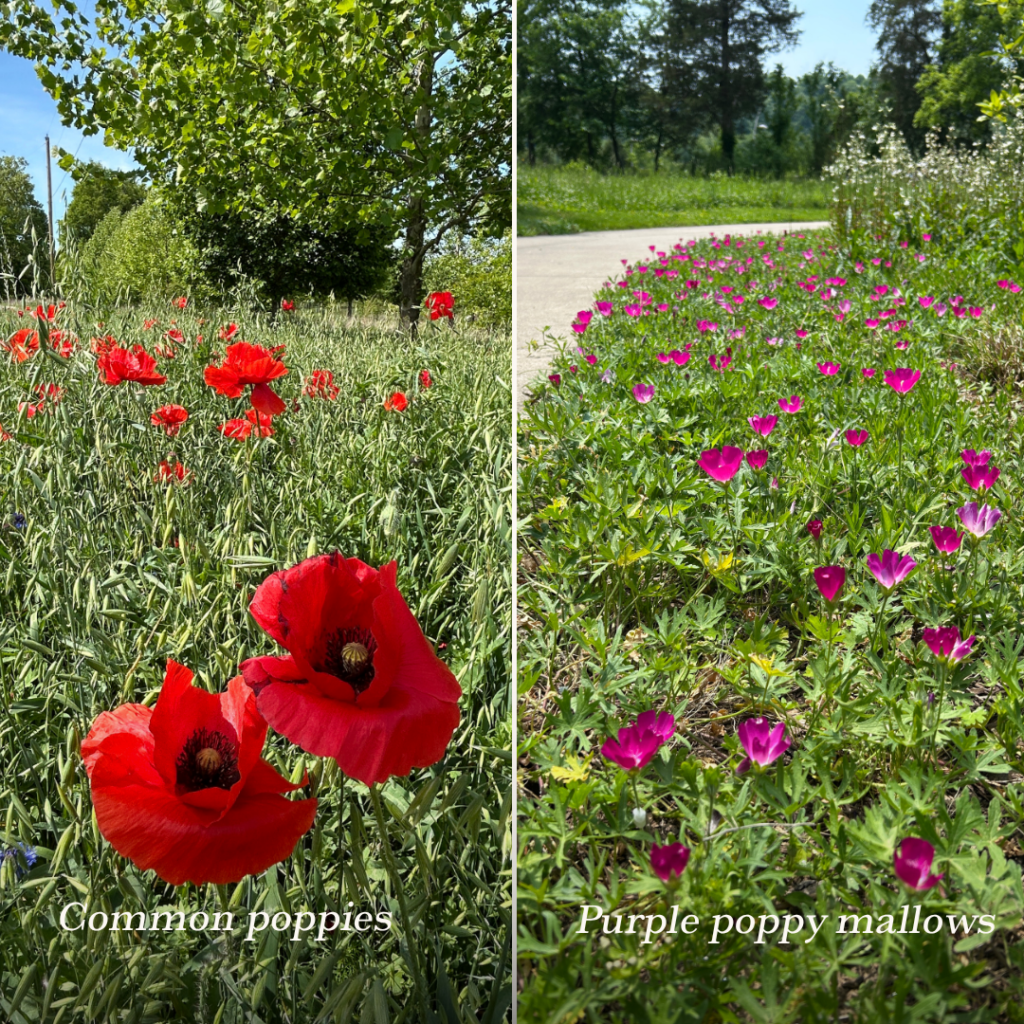
Outside the English Station Road entrance to at Beckley Creek Park, near the Egg Lawn, lies a grassy field dotted with vibrant red poppies (Papaver rhoeas). These flowers can also be viewed at the garden entrance to Pope Lick Park, along the Louisville Loop across from the Pope Lick Park Trailhead.
Poppies are characterized as “perfect” flowers in botanical terms because each bloom contains both male and female reproductive structures, allowing for efficient pollination. Alongside poppies, look for native coneflowers and black-eyed Susans emerging this month, brightening open meadow areas across the parks.
Purple poppy mallows (Callirhoe involucrata), also known as winecups, can be found blooming near the Ogle Foundation Woodland Pavilion, on the paved trail leading to the Woodland Garden. These small, vibrant flowers are nyctinastic, meaning they open in the morning and close in the evening. After pollination, the flowers remain closed.
Magic that stays with you
The magic of May at The Parklands goes beyond beauty. Each native wildflower contributes to the ecosystem. At the same time, carefully selected ornamental plants help spark curiosity and deepen our connection to the natural world.
The experience of May blooms is also open to interpretation, and that is part of its appeal. Next time you hike or bike through the parks—this month and into summer—take a moment to notice what you enjoy most about different flowers. Then, see if you can carry that sense of appreciation with you throughout your day, like a butterfly gliding from one bloom to another, anticipating what brightness it might find next.