
Pollinator Week Is Here, and So Is the Flowering, Fluttering Beauty
It’s Pollinator Week and, almost on cue, our gardens and natural areas are alive with activity. Butterflies and many moths flit from one bright wildflower to the next in search of nectar. As they feed, they unintentionally pick up pollen on their legs and bodies and carry it from flower to flower.
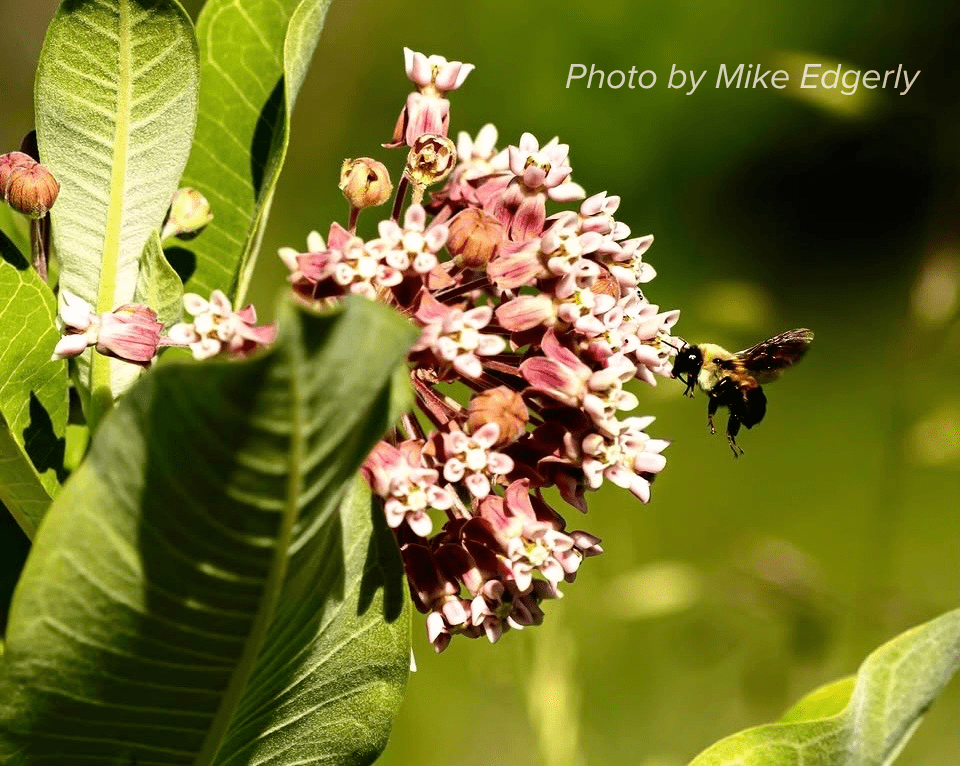
Bumblebees are even more efficient pollinators. They seek out both nectar and pollen, which serve as their food sources. Their hairy bodies act like sticky tape, collecting and transporting pollen grains as they move between blooms.
Other pollinators include insects such as flies, lightning bugs (fireflies), and beetles, as well as hummingbirds, bats, lizards, and various small mammals.

Critical role of pollinators
Between 75% and 95% of flowering plants need help with pollination.* Many of the fruits, veggies, and even clothing and building materials we rely on are possible because of pollinators.
Beyond supporting agriculture, pollinators play a vital role in maintaining healthy ecosystems. By spreading pollen, they help flowering plants produce seeds, nuts, and fruits that provide food for countless species of wildlife.
Fascinating co-evolution of pollinators and plants
Pollinators use information such as size, fragrance, and color to locate flowers. In turn, many plants have evolved specialized traits that attract specific pollinators.**
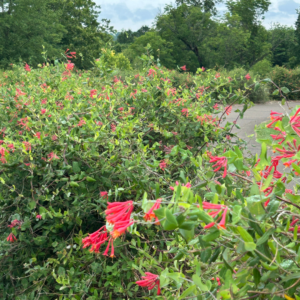 One unique example of this relationship in The Parklands is trumpet honeysuckle (Lonicera sempervirens). The flower is ornithophilous, meaning it is specifically adapted for pollination by birds. Its vivid, tubular blooms accommodate a hummingbird’s long beak and tongue. You can see these flowers on vines along the Louisville Loop in the northernmost section of Beckley Creek Park.
Another fascinating example is the common milkweed (Asclepias syriaca), an important plant for many pollinators. Look closely at one of its pink flower clusters in our meadows and you’ll find a highly intricate structure. Rather than dusting visiting insects with loose pollen, milkweed uses waxy pollen sacs called pollinia that stick to visiting insects. These sacs are contained within the flower’s vertical grooves.
A celebration you can enjoy at The Parklands
Pollinator Week is an annual celebration in support of pollinator health that was begun and is managed by Pollinator Partnership. If you’re planning a visit this week to The Parklands, one fun way to celebrate is to go on a Pollinator Hike. See how many different kinds of pollinators you can spot visiting flowers. You can also take time to appreciate the flowers, observing their colors, showy petals, and the way blooms are arranged on stems (an inflorescence).
 One benefit of Pollinator Week is how it connects us to nature by drawing our attention to details we might otherwise overlook.
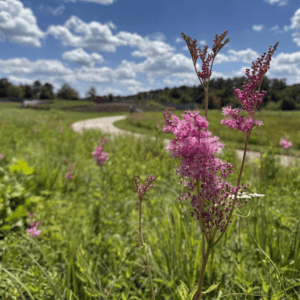
A recent photo shared by our Gardening Team shows queen-of-the-prairie (Filipendula rubra) blooming north of the Humana Grand Allee in Beckley Creek Park. The fluffy, feathery pink flowers on this tall native perennial remind us of cotton candy at summer picnics, festivals, and fairs. One caveat: While it produces an abundance of pollen, it lacks nectar.
Next time you visit Beckley Creek Park, you’ll know that the meadow has a queen—or rather, many queens—presiding over the landscape. (Queen bees may be present too, but they spend most of their time within the hive.)
Elsewhere, in prairies, riparian forests, wetlands, and meadows throughout the parks, you’ll find many other species of flowering plants, possibly with pollinators. You might spot a black swallowtail (Papilio polyxenes) on a vibrant coneflower (Echinacea), a caterpillar transforming into a butterfly, or a bee collecting nectar from bee balm (Monarda). Each is a sign of a thriving, pollinator-friendly habitat, made possible by Member support.
Happy Pollinator Week and flowering season!
*Source: Pollinator Partnership, “Pollinators Need You. You Need Pollinators,” pollinator.org, January 24, 2025
**Source: Bee Redfield of the Pollinator Partnership, “The Evolution of Pollination as an Ecosystem Service,” pollinator.org, October 29, 2024