
Migratory moments: serendipitous birding along the Echo Rim Trail
Beckley Creek Park
Above our heads every night now, and across the eastern United States, billions of birds are winging their way north from as far away as southern Latin America to as far north as the Arctic Circle. Many of these birds weigh as little as a couple of ounces and will fly thousands of miles to reach their summer nesting sites. Once they have reproduced, they then, along with their millions of offspring, will repeat the journey going south just a few months after arriving.
It is one of the world’s great migrations, and it moves silently across the sky through spring and early summer, with a peak in early to mid-May. And yet, amazingly, outside of the birding community, few know of it or see it happening.
Because migrating birds come from many places and pass through on their way to others, the season creates a constantly changing community of strange bedfellows, many of whom can meet for a moment somewhere along the way and then never connect again in their life cycles. Much like humans passing through a busy airport, there are endless random encounters with diverse strangers that will never be repeated.
This spring diversity provides a wonderful set of serendipitous encounters that I call “migratory moments.” Let me describe one:
A couple of weeks ago, I was birding along The Parklands’ newest amenity, The Echo Rim Trail, in search of any bird but especially these transient migrants. I was having an incredible day, seeing and hearing dozens of birds, many that only occur in Kentucky now.
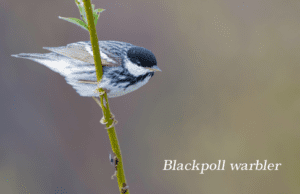 As I came down from the high point of the trail into a mixed grove along Floyds Fork with some low and high trees, I began to hear above me first the song of a blackpoll warbler, then almost immediately following it, the song of a blackburnian warbler, and then low in the woods down the trail the rising tremolo of a Swainson’s thrush. None of these birds nest here and all three were coming from different winter grounds and heading to different nesting grounds. Only for a moment, in The Parklands in Louisville, Kentucky were they found together.
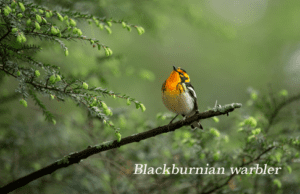 With the trees leafed out, I never found the blackpoll, despite his continued singing. The blackburnian, one of the most beautiful of the famed North American warblers, did show himself (it was a male and they show the most dramatic colors and songs), and I spent at least five good minutes with great views. Combined this was a rare treat: a spring moment of color and three beautiful songs, all together.
But the moment didn’t end. Spending a long morning with your neck cranked back for minutes at a time, eyes searching for these tiny birds, produces “warbler neck”: stiffness and soreness that demands a break.
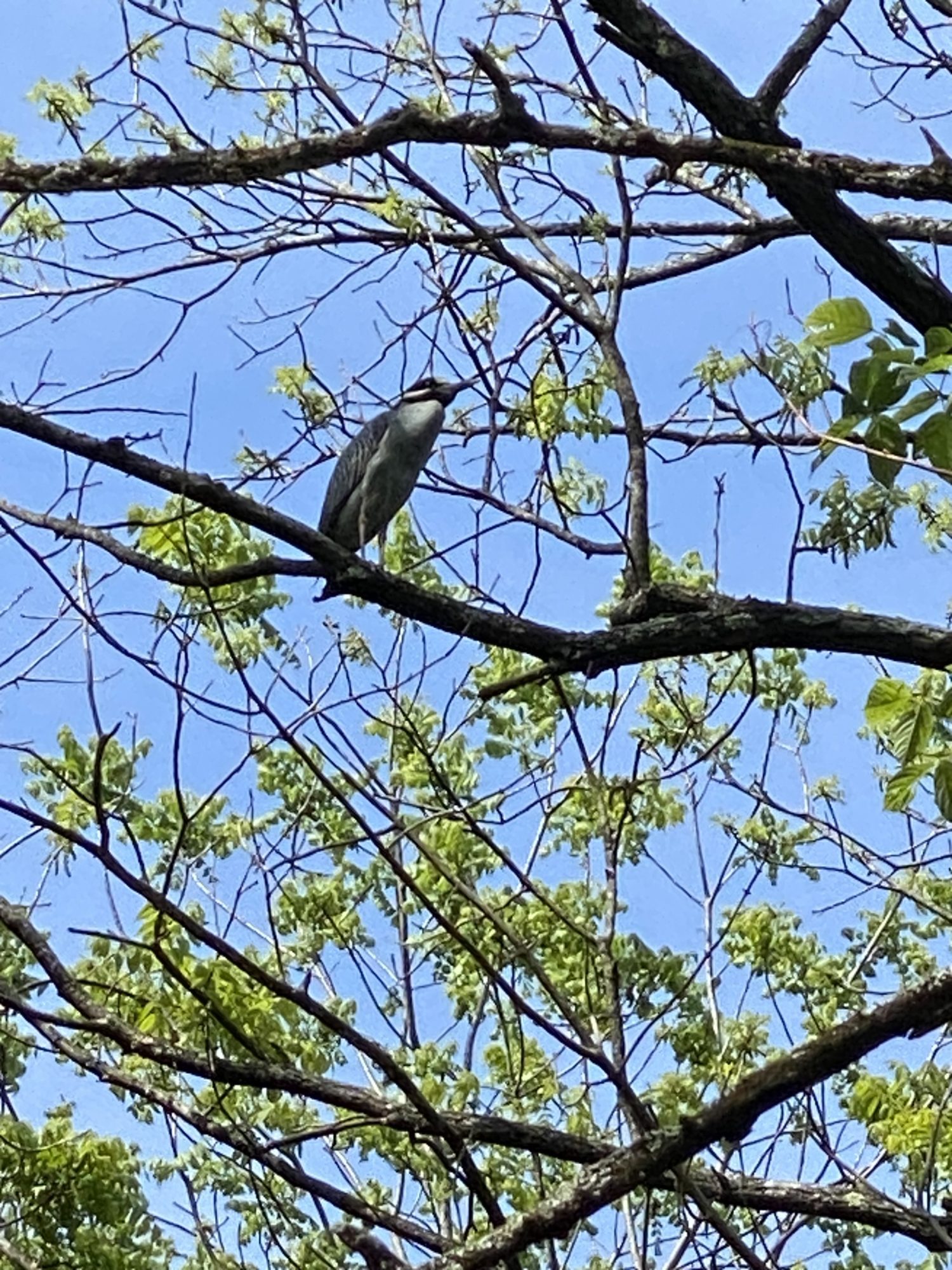
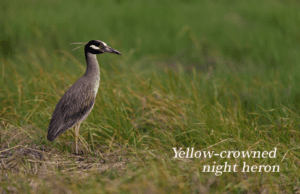 So, I lowered my binoculars, began to bring my eyes to level, when there, just ten feet above me, standing motionless and silent, so close and so big compared to the warblers that I didn’t need my binocs, was a yellow-crowned night heron, a migrant of the American South, a bird that barely crosses the Mason-Dixon Line in its spring travels, and one I had never seen before in Louisville or The Parklands.
After resting my neck for a minute, I spent a good ten minutes immersed in this moment: a glance at the night heron, a glance at the blackburnian, then a snippet of the blackpoll high-pitched staccato song, and the upscale jingle of the Swainson’s.
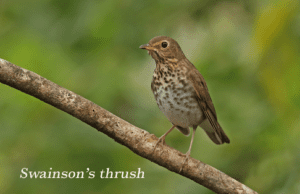 It was an experience that I will likely never duplicate again: the energy of the world-traveling warblers and thrush, flashing past the heron and bringing the quiet slowness of a southern swamp, all together for the briefest of moments in one of nature’s great spectacles, and just one of the reasons we Kentucky birders wait a whole year for the three to four weeks of the migration to arrive. Once it leaves, there’s still plenty of activity but not like this!