
Discover the woodland wonders of The Parklands in fall
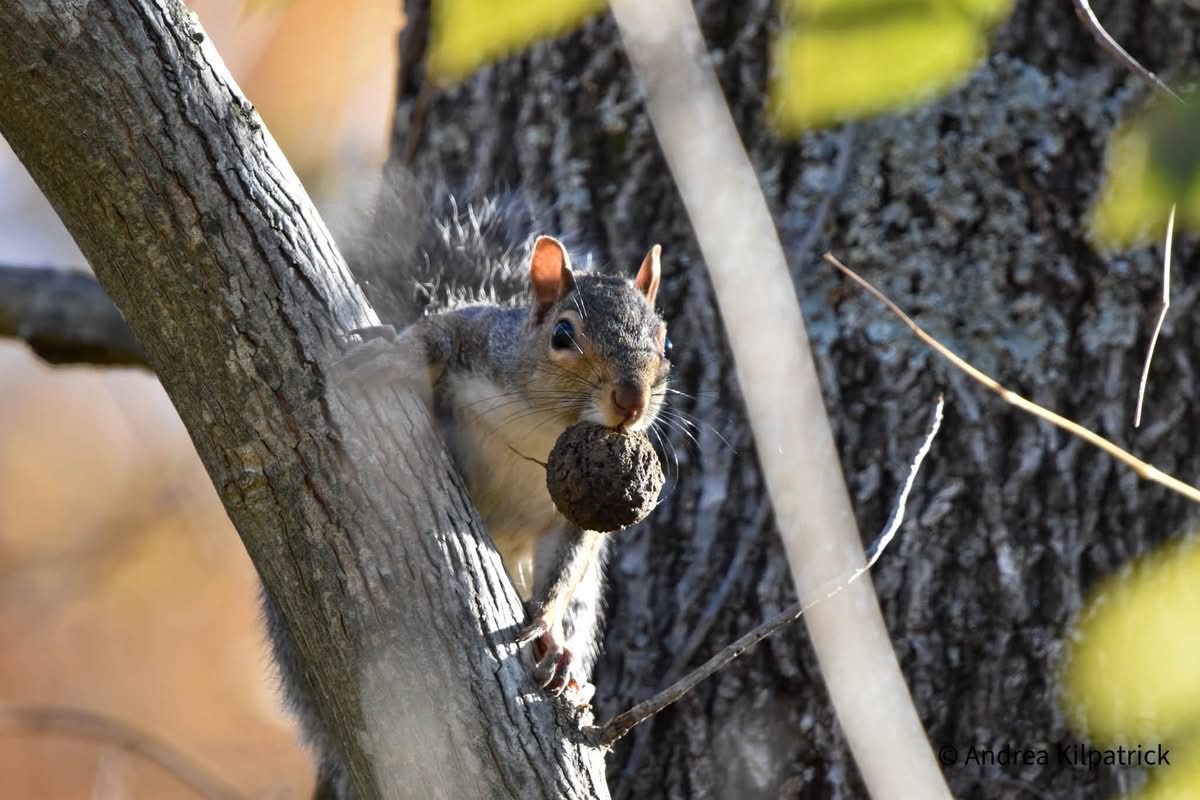
Stroll through the Moss Gibbs Woodland Garden on a fall day from one of its three entrances, and you’ll be greeted by trees and low-lying shrubs. On a recent morning, a squirrel joined nature’s welcoming committee for our team. From its position high up in the canopy, it had something to say to a few of our staff members who were gathered in conversation.
Apparently, the squirrel did not get the memo that we’d be meeting in the garden to capture video footage, and it wasn’t shy in voicing its displeasure.
Tyler Hampton, our Director of Horticulture, Natural Areas, and Trails, immediately identified the woodland creature, even though it sounded like a bird. Tyler’s no stranger to squirrels, so he knew exactly what we were hearing. Some squirrels, as it turns out, can mimic the sentinel calls of birds and other sounds, despite having a different vocal apparatus.(1)
Research has also shown that eastern gray squirrels listen to the casual chatter of birds to determine whether an environment is safe.(2)
When visiting woodland habitats, listening can be part of the wonder of the nature experience, particularly during fall, when squirrels, chipmunks, and other small creatures are busy foraging.
Viewing wildlife can be pretty amazing, too.
Just in time for the Thanksgiving holiday, flocks of wild turkeys can occasionally be spotted along forest edges in search of acorns, seeds, and other food.
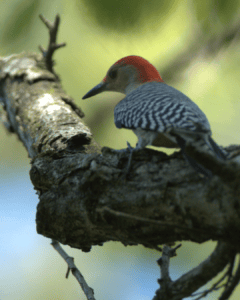 Woodpeckers, with flashes of red on their heads, are also fun to spot in fall and may be easier to see with nearly bare tree branches. You may even catch a glimpse of an owl, perhaps after getting the sense that one is watching you!
Look down toward the forest floor, and you may see a dark-eyed junco hopping around in search of seeds. Or look up to spot blue jays collecting and caching acorns.
Of course, white-tailed deer are common throughout the parks during autumn. November is peak breeding season for deer, so mature bucks with large antlers may be more visible in daylight hours.
Active, bustling wildlife can make forested areas feel magical in fall. But wildlife isn’t the only wonder worth noticing. Here are a few other things to look for on your next visit:
 Lingering autumn color
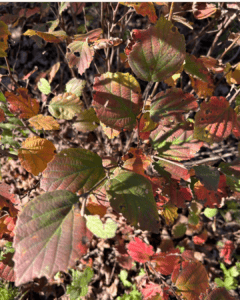
In woodland areas throughout the parks, fall color lingers on some trees, while leaves on others continue to drift to the ground like spinning paper airplanes. From a distance, whether you’re hiking or cycling along the Louisville Loop, copper and russet oak leaves may catch your attention, along with golden beech leaves.
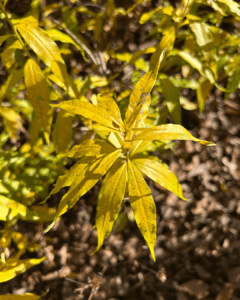
Within the Moss Gibbs Woodland Garden, Shining Blue Star perennials display vibrant golden-yellow fall foliage. Fothergilla ‘Mount Airy’ shrubs feature leaves with dramatic gradients of yellow, orange, and red. Meanwhile, the leaves of oak-leaf hydrangeas transition from green to a beautiful deep burgundy.

Textured mosaics of fallen leaves
Next time you’re hiking along a natural-surface trail, take a moment to notice the leaves at your feet. You may also spot critter tracks, but remember to watch for exposed tree roots and rocks along the path.
Together, the fallen leaves create a textured mosaic across the forest floor. Perhaps even more gratifying is seeing leaves floating on the Floyds Fork stream.
 Puffy, gnarly, and sculptural forms
The forest and decaying logs display a variety of fungi, including puffballs, turkey tails, shaggy ink caps, and chicken of the woods. As leaves fall, the gnarls, bends, and distinctive bark patterns of trees become more noticeable, too.
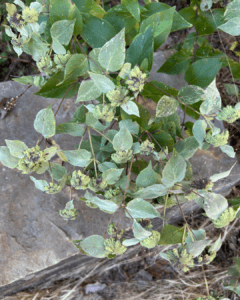
Even at the plant level, unusual structures and characteristics are worth a closer look. Take the mountain mint, for example. Instead of withering away, the plant’s dense flower clusters and seed heads retain their sculptural forms and aromatic qualities through fall and winter.
Angled light and golden effects
While daylight hours are shorter in the fall, sunlight can feel softer and more golden as the sun sits lower in the sky. Its angled rays filter through trees and remaining leaves, creating captivating lighting effects. These are especially noticeable on mornings when frost outlines the delicate fronds of woodland ferns and the serrated, sometimes tattered edges of fall leaves.
Woodland grasses, seed heads, and mosses also sparkle under a coating of frost.
 Plan your fall visit
Maybe you’re planning a stroll through the Woodland Garden or another forested area of the parks? If so, don’t be surprised if a squirrel calls out to you like it’s a resident blue jay or crow. We also hope you experience the wonder of foliage that’s fading but still colorful in places, the textural interest of a fern, or the sight of large leaves floating along a stream glistening in the light.
Need help planning your visit? Check out the sightseeing section of our website for information on popular locations. You can prepare by reading our guide to fall and winter hiking, written a couple of years ago by Evan Cross, our Assistant Director of Horticulture, National Areas, and Trails.
Whenever you head out, we hope you are surprised in the most wondrous possible ways.
Sources:
- Christopher Joyce and Bill McQuay, “Squirrels Mimic Bird Alarms to Foil the Enemy,” NPR Morning Edition, September 3, 2015
- David Frey, “Eavesdropping Squirrels Take Cues from Bird Chatter,” The Wildlife Society, September 9, 2019
Thank you to Andrea Clotz Kilpatrick for sharing the featured squirrel photo.